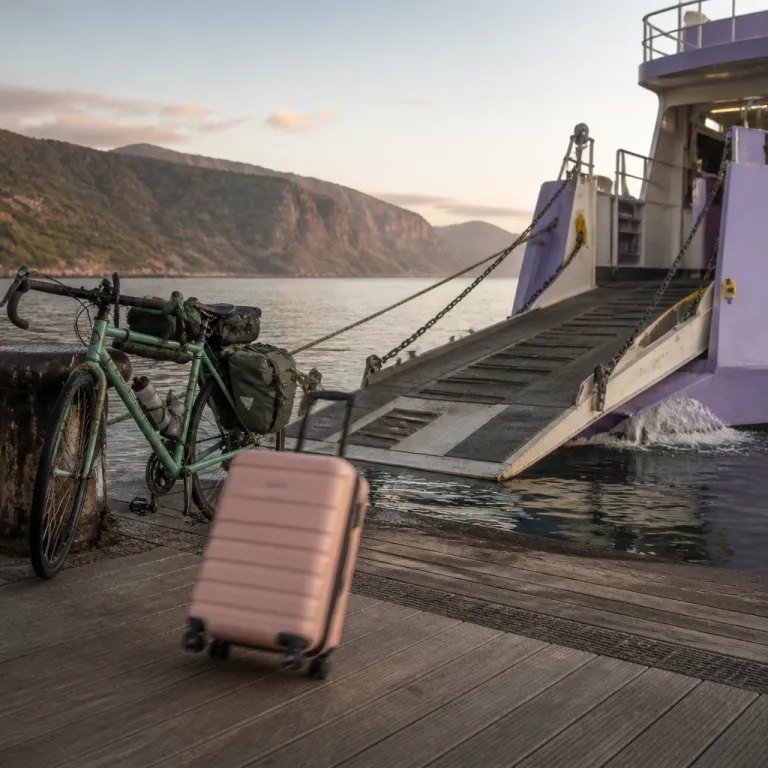
The ferry backbone of the western Canary Islands
Canary Islands ferry hopping only really comes alive when you start reading the timetables. The western islands form a compact triangle where each island feels distinct, yet ferries stitch Tenerife, La Gomera and El Hierro together in a rhythm measured in minutes and hours rather than days. Treat the main ferry routes as your moving promenade, not just transport between one island and the next island.
The natural hub is Los Cristianos, the busy port town on the south coast of Tenerife where the harbour funnels most ferries towards La Gomera and beyond. From here, Fred. Olsen Express and Naviera Armas run multiple daily crossings, with the fastest ferry to San Sebastián de La Gomera taking around fifty minutes in calm conditions. These ferries are the backbone of car free island hopping in this part of the Canary Islands, and they make it realistic to move between islands without ever touching a rental desk.
On board, the mood is quietly purposeful rather than cruise ship theatrical, which suits independent travellers who care more about the next island on the horizon than deck games. You will hear locals comparing prices for different ferries, debating whether the extra minutes saved by a faster sailing justify the higher fare. Average ticket prices between islands hover around forty euros, though booking early and travelling outside peak hours can trim that figure by a useful margin.
From Tenerife, the main western routes fan out towards La Gomera and then El Hierro, while separate ferries connect other Canary Islands such as Gran Canaria, Fuerteventura and Lanzarote. Those eastern crossings, linking ports like Las Palmas de Gran Canaria, Morro Jable, Playa Blanca and Puerto del Rosario, matter if you are planning a longer chain of islands, but they sit beyond the slower tempo of this western trio. Here, the focus is on shorter hours at sea, measured in neat blocks of hours and minutes that still leave room for a late afternoon walk when you step ashore.
“Is it possible to travel between these islands without a car? Yes, using ferries and public buses.” That simple statement underpins the whole premise of this route, because the guagua bus networks on each island extend the reach of the ferries far beyond the port. Think of the ferry as your trunk line across the Canary Islands, and the buses as the fine capillaries that carry you into valleys, forests and small towns where the real character of each island reveals itself.
Tenerife’s scale, from Anaga forests to the port of Los Cristianos
Tenerife is the largest island in the western Canaries, and its scale can intimidate travellers who arrive without a car. The trick is to treat Santa Cruz de Tenerife, La Laguna and Los Cristianos as three distinct gateways, each linked by frequent buses that make the island feel smaller and more navigable. For this particular island hopping arc, Los Cristianos is your operational base, while Santa Cruz and La Laguna become optional detours rather than obligations.
From the capital of Santa Cruz, long distance buses cross the island in a couple of hours, dropping you in Los Cristianos with enough minutes to spare before the next ferry. The route passes close to the slopes of Teide, reminding you that this island is not just about beaches but also about altitude, volcanic geology and sharp changes in climate. If you have a spare day, a separate bus north from Santa Cruz takes you into the Anaga Rural Park, where laurel forests and knife edge ridges feel a world away from the ferry decks and port cafés.
Los Cristianos itself is not the prettiest town in the Canary Islands, yet it works superbly as a ferry hub because everything you need sits within a short walk. You can step off a bus from Santa Cruz or from the airport, walk ten minutes downhill and find yourself at the terminal where Fred. Olsen Express and Naviera Armas staff call out boarding announcements. That proximity matters when you are travelling light and timing your moves in hours and minutes rather than in overnight stays between each island.
For travellers who have already tested multi island routes elsewhere, such as the two island hop between Corsica and Sardinia, this western Canaries triangle feels like a logical next step. The same logic applies here as on that Mediterranean crossing, where the right port town becomes your hinge between islands and ferry schedules shape your days. In Tenerife, Los Cristianos plays that role more convincingly than Santa Cruz, because the ferries to La Gomera and El Hierro leave from here, not from the capital.
Beyond the western trio, Tenerife also connects by ferry to Gran Canaria, with sailings linking Santa Cruz de Tenerife to Las Palmas de Gran Canaria in a few hours. Those crossings, often operated by Fred. Olsen Express or Naviera Armas, are useful if you want to fold the larger island of Gran Canaria into a longer itinerary. For this car free western loop, though, they remain background options rather than core routes, a reminder that the wider Canary Islands archipelago is always there if you decide to extend your hopping beyond this focused triangle.
La Gomera’s terraces, whistled language and the port of San Sebastián
La Gomera sits just across the water from Tenerife, yet the change in tempo is immediate the moment your ferry noses into San Sebastián de La Gomera. The island is smaller, steeper and more intimate, with terraced valleys that seem to fold in on themselves as you climb away from the coast. For car free travellers, this is where the combination of ferries, buses and walking trails really starts to feel like a complete system rather than a compromise.
From the harbour at San Sebastián, buses fan out across the island on a handful of core routes operated by Guaguas Gomera, with around five main lines linking the capital to Valle Gran Rey, Vallehermoso and Playa Santiago. Schedules change with the seasons, so you need to check the latest hours and minutes before committing to a specific hike or valley. The reward for that small amount of planning is the ability to ride a morning bus up into the highlands, walk a section of the GR trails between villages, then drop back down to the coast in time for an evening ferry.
La Gomera’s cultural texture is as compelling as its topography, especially for a solo traveller who has time to linger in small bars and listen. The island’s famous whistled language, Silbo Gomero, still echoes across ravines during demonstrations and festivals, a reminder that communication here has always been shaped by steep terrain. When you hear those whistles drifting over a valley that you reached by bus and on foot, the whole premise of car free island hopping in the Canary Islands feels not just practical but also quietly respectful.
San Sebastián itself is compact enough that you can walk from the ferry terminal to most guesthouses in under fifteen minutes, which keeps transitions between islands pleasantly frictionless. The town’s waterfront cafés are ideal for that liminal hour between a morning hike and an afternoon sailing, when you are still dusty from the trail yet already thinking about the next island. It is in these pauses, rather than on the ferries themselves, that the rhythm of canary islands ferry hopping really settles into your body.
Travellers who enjoy weaving culture into their routes often pair this western Canaries loop with other urban rich island experiences, such as a few days in Havana for culturally curious island hoppers. The contrast between a dense Caribbean city and the quiet terraces of La Gomera is sharp, yet the underlying logic is the same. You are using ferries, buses and your own feet to move through islands at a human pace, rather than letting a rental car dictate how quickly you skim across the surface.
El Hierro’s end of the world quiet and the case for slower hopping
El Hierro sits at the far western edge of the Canary Islands, and it feels every bit like an end of the world island. The ferry from La Gomera or Tenerife takes longer than the short hop between Tenerife and La Gomera, stretching the crossing into a few unhurried hours. That extra time at sea is part of the appeal, because it creates a psychological distance that matches the island’s reputation for quiet and introspection.
Arriving by ferry rather than by plane means your first view of El Hierro is the dark volcanic coastline rising slowly from the Atlantic, not an airport apron. Buses on the island are limited, with a small network linking the main settlements and the port, so you need to be comfortable with timetables that quote hours and minutes rather than frequent urban style intervals. The reward is an island where walking, hitchhiking and long café stops become part of the transport mix, and where the absence of constant movement feels like a feature rather than a flaw.
This is where the argument for three or four nights per island becomes strongest, because El Hierro does not reveal itself in a single day. You need time to walk the old paths between villages, to sit above the El Golfo valley and watch the light change, to swim in natural pools that feel like private amphitheatres. Trying to fold El Hierro into a rushed day trip from Tenerife would flatten everything that makes this island distinct, turning a place of deep quiet into just another tick on an island hopping list.
For solo travellers, the combination of limited buses and generous walking options encourages a particular kind of planning, where you match your hikes to the bus schedule and to the ferry departures back towards Tenerife. You might take a morning bus inland, walk a loop that brings you back to the same stop in a few hours, then ride down to the port with enough minutes to spare for a final swim. That interplay between fixed schedules and flexible days is the essence of this western Canaries route, and it rewards travellers who enjoy reading timetables as much as maps.
Compared with busier islands such as Gran Canaria or Fuerteventura, where ferries connect large ports like Las Palmas de Gran Canaria, Puerto del Rosario and Morro Jable in a steady flow, El Hierro feels almost private. There are no sprawling resort zones, no long lines of cars waiting to board the next ferry, just a small cluster of vehicles and foot passengers moving at a measured pace. It is the kind of island where you might almost miss the ferry because you are not quite ready to leave, which is perhaps the best possible definition of successful canary islands ferry hopping.
Practical sequencing, prices and extending your Canary Islands ferry hopping arc
Planning this western Canaries loop without a car starts with choosing your direction, and the most logical sequence runs from Tenerife to La Gomera and then on to El Hierro. Beginning in Tenerife gives you the widest choice of flights into the Canary Islands, plus easy bus connections from the airports to Santa Cruz or directly to Los Cristianos. From there, you can shape your island hopping in either a tight triangle or a looser chain that eventually folds in other islands further east.
In practical terms, you might spend three nights on Tenerife, four on La Gomera and three on El Hierro, giving each island enough hours and minutes to breathe. Ferry prices between these islands typically sit around forty euros per leg, though promotions and off peak sailings can bring that down, especially if you book in advance. Operators such as Fred. Olsen Express and Naviera Armas publish their timetables and prices online, and schedules are usually updated weekly to reflect seasonal changes in demand.
Shoulder season travel, particularly in autumn, often brings calmer seas and softer light, which matters on the longer crossing to El Hierro where swell can occasionally disrupt smaller ferries. Building a buffer day into your itinerary, especially before any fixed flight home from Tenerife, is a wise insurance policy against weather related delays. It also gives you the option of an extra unplanned day in Los Cristianos or Santa Cruz, where you can simply watch the ferries come and go while you decide whether to add another island to your chain.
If you are tempted to extend beyond the western trio, the wider Canary Islands network opens up routes towards Gran Canaria, Fuerteventura and Lanzarote. From Santa Cruz de Tenerife, ferries run to Las Palmas de Gran Canaria, where you can connect onwards to Morro Jable or Puerto del Rosario, and from there to Playa Blanca or even the small nature reserve of Isla de Lobos. Those eastern islands introduce a different scale and energy, with larger ports, longer crossings measured in several hours and a more obvious contrast between urban centres and quieter corners.
Travellers who enjoy building multi stage itineraries often combine this western Canaries loop with other ferry based journeys, such as a week on Croatia’s island food trail from Split to Korčula via Brač and Hvar. The common thread is a preference for routes where ferries, not flights, shape the structure of the trip, and where each island feels like a chapter rather than a footnote. Canary Islands ferry hopping fits neatly into that philosophy, offering a blend of reliable infrastructure, reasonable prices and enough islands to keep you planning return visits long after you have sailed away from your last port.
Who this western Canaries route suits, and how to travel it well
This Tenerife, La Gomera and El Hierro loop is built for solo explorers who value autonomy, public transport and time to let each island set the pace. You need to be comfortable reading ferry timetables, checking bus schedules and occasionally adjusting your plans when a service shifts by a few minutes. In return, you gain a style of island hopping that feels grounded, low impact and quietly luxurious in its freedom from parking spaces and fuel gauges.
Travelling without a car in the Canary Islands also aligns neatly with a broader move towards more sustainable island tourism, where ferries and buses carry more of the load than private vehicles. Local authorities and operators have been gradually improving services, from increased ferry frequency on key routes to more integrated ticketing systems that make transfers smoother. For you as a traveller, that translates into less time worrying about logistics and more time watching the coastline slide past from the open deck of a ferry.
On the ground, the essentials are simple yet worth stating clearly, especially if this is your first multi island trip. Book ferries in advance when possible, check bus schedules before committing to a specific hike or dinner reservation, and wear comfortable walking shoes because distances that look short on a map can feel longer on steep island streets. Tourist information centres in ports such as Los Cristianos and San Sebastián de La Gomera are valuable allies, offering up to date data on ferries, buses and walking routes that might not yet have filtered through to third party apps.
For many travellers, the most satisfying itineraries are those where the number of islands visited matters less than the quality of time spent on each island. Three islands in ten or eleven days, with ferries linking Tenerife, La Gomera and El Hierro in a measured sequence, is enough to feel the distinct character of each place without turning your trip into a checklist. You will remember the laurel forests above Santa Cruz, the terraces above San Sebastián, the quiet coves of El Hierro and the way the ferry decks became familiar spaces between them.
Once you have experienced this western Canaries arc, you may find yourself looking at other archipelagos through the same lens, seeking routes where ferries and public buses can carry you from island to island. Whether that leads you back to the Canary Islands for a different combination of islands, perhaps folding in Gran Canaria or Fuerteventura, or towards entirely new seas is up to you. What remains constant is the pleasure of standing on a ferry deck as the next island appears through the salt spray, and realising that you already want to stay longer than planned.
FAQ
How long is the ferry from Tenerife to La Gomera ?
The fastest ferries between Los Cristianos on Tenerife and San Sebastián de La Gomera take around fifty minutes in good conditions. Slower sailings can take up to an hour, especially when sea swell requires more cautious speeds. Multiple daily departures mean you can usually find a crossing that fits your preferred time of day.
Can I visit Tenerife, La Gomera and El Hierro without renting a car ?
Yes, this western Canary Islands loop is entirely feasible without a car, using ferries and public buses on each island. Tenerife has an extensive bus network, La Gomera is covered by Guaguas Gomera on several core routes, and El Hierro has a smaller but functional system. Walking and occasional taxis can fill any gaps between bus stops and trailheads.
How much should I budget for inter island ferry tickets ?
Average one way ferry prices between the western islands sit around forty euros per leg for foot passengers. Costs vary by operator, time of day and how far in advance you book, with Fred. Olsen Express and Naviera Armas often offering promotional fares. Booking early and travelling outside peak holiday periods usually yields the best combination of price and schedule.
How many days do I need for this western Canaries route ?
A balanced car free itinerary typically runs to around ten or eleven days, with three or four nights on each island. That allows time for at least one full day of hiking and one slower day in each place, plus travel days shaped around ferry departures. Compressing the route into fewer days is possible but tends to feel rushed, especially on El Hierro.
Do I need to worry about seasonal changes to ferry and bus schedules ?
Ferry schedules and bus timetables in the Canary Islands are updated regularly, with seasonal adjustments based on demand and daylight hours. It is wise to check official operator websites and local information boards shortly before travel, rather than relying on older printed material. Building a small buffer into your plans helps absorb any minor timetable shifts without stress.
Sources
Fred. Olsen Express official website
Naviera Armas official website
Guaguas Gomera official website