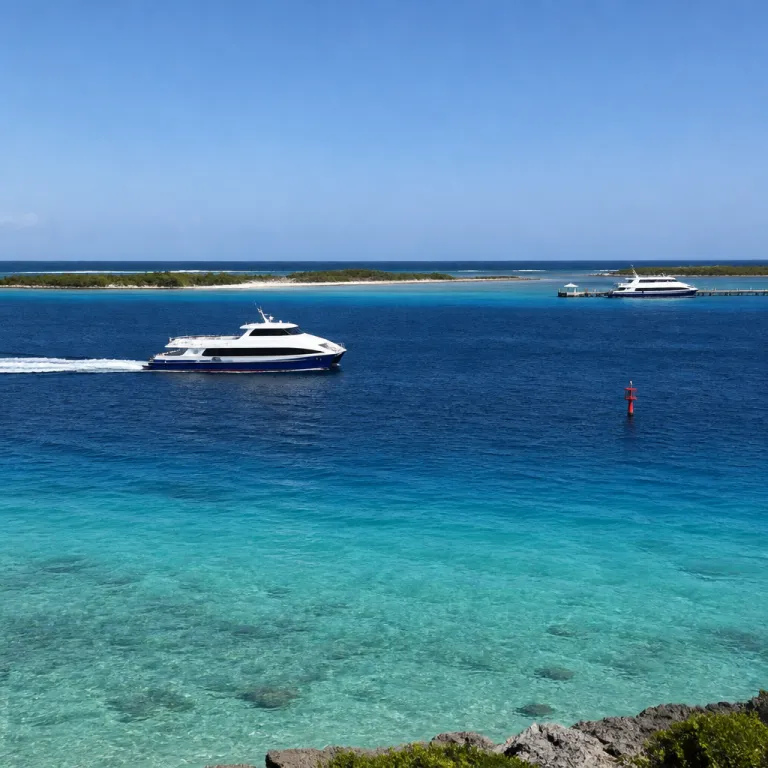
From fragmented skies to a Caribbean island hopping ferry network
For decades, planning island hopping across the Caribbean meant stitching together short, expensive flights. Regional airlines linked one island to the next, yet schedules were thin, fares were high, and last minute changes could derail an entire trip. A coherent sea based network simply did not exist, leaving solo travelers to juggle complex inter island connections or abandon multi island itineraries altogether.
Two parallel moves are now reshaping that picture for the independent traveler. CARICOM governments are backing a trial regional ferry corridor using the vessel Galleons Passage, while private operators such as Makana Ferry build dense routes around hubs like Sint Maarten. Together they signal a shift from isolated island ferry services to a broader Caribbean island hopping system that finally treats the archipelago as one connected maritime destination.
The Galleons Passage is widely reported as a 74 metre catamaran with capacity for roughly 400 passengers and around 60 vehicles. Public procurement documents from the Government of Trinidad and Tobago in 2018 describe it as a roll on/roll off passenger ferry designed for mixed use service, with technical specifications and capacity figures set out in the tender. On board, travelers can move between a cafeteria, a bar, and a VIP lounge, turning a simple crossing into a slow travel experience between island cultures. The vessel has been associated with CARI Cargo Inc. in recent CARICOM discussions about a pilot cargo and passenger service, with officials indicating a target of sub–100 US dollar economy fares on the first long distance route; final pricing, however, will depend on fuel costs and demand once operations begin, so always confirm current fares with the operator.
The initial trial route is planned between Georgetown in Guyana and Port of Spain in Trinidad and Tobago. That single corridor may sound modest, yet it plugs a major gap in south eastern Caribbean travel, where flights between Guyana and Trinidad and Tobago often price out longer stays or spontaneous island hopping. In a 2023 CARICOM Heads of Government communiqué, Barbados Prime Minister Mia Mottley framed this as a first step toward a wider inter island ferry network that could eventually reach Barbados, Saint Vincent and the Grenadines, Dominica, and other eastern Caribbean islands, with the communiqué outlining the concept of a regional ferry corridor rather than a one off experiment.
For solo travelers, the implications are immediate and practical. A reliable ferry between Guyana and Trinidad and Tobago would mean you can plan a surface based trip that continues by air to Saint Lucia, the Grenadines, or the Virgin Islands without relying on a chain of fragile connections. It also means that, for the first time on this route, a regional ferry could carry both you and your gear across borders, whether you are chasing hiking trails, freediving spots, or low key guesthouses on smaller islands.
At the same time, the Makana Ferry network around Sint Maarten is quietly proving how a dense inter island system can work at a human scale. Operating from Great Bay Marina in Philipsburg, this company links nearby islands in roughly 45 minutes per leg on average, according to its published schedules as of early 2024. That means you can wake up on Saint Maarten, take a morning sailing to Saba for a hike, then continue to Saint Eustatius or back to Saint Kitts and Nevis in the same day.
Makana Ferry currently advertises services connecting Sint Maarten, the French side of Saint Martin, Saint Kitts, Nevis, Saba, and Saint Eustatius. These islands form a compact cluster where ferries run most days of the week, with multiple departures on core routes that feel closer to a commuter service than a rare long distance crossing. For a solo explorer, that density turns island hopping from a once in a lifetime trip into something you can structure around weather windows, local festivals, or a last minute recommendation from another traveler on deck.
The St. Maarten Tourism Bureau coordinates with Makana Ferry and neighboring tourism offices to align routes with regional events and visitor flows. Partners include the Saint Kitts Tourism Authority, the Nevis Tourism Authority, the Saba Tourism Bureau, the Saint Eustatius Tourism Development Foundation, and the Saint Martin Tourism Office, as noted in joint press releases in 2022 and 2023. Their shared goal is to make the emerging Caribbean ferry network not just a transport grid, but a curated set of island experiences that reward slow, flexible travel.
For context, the official guidance for this inter island corridor is refreshingly straightforward. Recent advisories from regional tourism offices emphasize three points: “Check ferry schedules in advance. Carry valid identification. Be prepared for customs procedures.” Those lines capture the current reality of Caribbean sea travel, where each island remains a separate jurisdiction, yet the routes between them are finally being treated as everyday infrastructure. If you are used to Schengen style land borders, the customs checks will feel formal, but the payoff is a more grounded sense of moving between distinct island cultures.
Compared with flying, the new services also speak to a broader shift toward lower impact, more sustainable travel. Short haul flights between nearby islands burn disproportionate fuel for very brief hops, while modern high speed catamarans can move larger numbers of passengers with a smaller per person footprint. For solo travelers who care about emissions but still want to visit multiple islands, the emerging Caribbean island hopping ferry network offers a practical compromise between reach and responsibility.
How the new ferries change real island hopping itineraries
The most immediate change for island hopping is psychological rather than purely logistical. Once you know there is a regular island ferry running several times a week, you start planning your trip around the rhythm of the sea rather than the constraints of regional airlines. That shift is exactly what has made other ferry led itineraries, such as the Lemnos to Çanakkale route between Greece and Turkey, so appealing to independent travelers who value flexibility over fixed packages.
In the northeastern Caribbean, Makana Ferry has effectively created a live test case for a compact inter island network. Daily or near daily sailings connect Sint Maarten and Saint Martin with Saint Kitts and Nevis, Saba, and Saint Eustatius, allowing you to build a multi island trip without ever entering an airport. The average 45 minute crossing time means you can treat each route as an extended commute, watching one island recede while the next appears through the salt spray.
For a solo explorer, that density of routes unlocks a different style of travel. You might base yourself in Philipsburg on Sint Maarten, then buy flexible tickets to hop to Saint Kitts for a few nights, continue to Nevis for quieter beaches, and finish with a hiking focused stay on Saba. Because the ferries run multiple times per day on several links in high season, you can adjust your island hopping plan on the fly, staying longer when a place surprises you or leaving early when the weather closes in.
To see how this works in practice, consider a concrete three day loop using currently bookable operators. On Day 1, you take a morning Makana Ferry departure from Philipsburg to Saba (around 45–60 minutes), spend the afternoon on the Mount Scenery trails, and overnight in a local guesthouse. On Day 2, you catch the mid morning sailing from Saba to Saint Eustatius, explore the Quill volcano and Oranjestad’s historic core, then board an afternoon or early evening ferry back toward Sint Maarten. On Day 3, you join a morning crossing from Sint Maarten to Nevis via Saint Kitts, arriving in time for a late lunch and an afternoon on Pinney’s Beach. Exact departure times vary by season, so always confirm schedules directly with Makana Ferry or the relevant port authority before you lock in accommodation.
Sample three day inter island ferry loop (indicative only; always verify current timetables with operators):
| Day | Route | Typical crossing time | Suggested focus |
|---|---|---|---|
| Day 1 | Philipsburg (Sint Maarten) → Saba | 45–60 minutes | Mount Scenery hikes, village guesthouse |
| Day 2 | Saba → Saint Eustatius → Sint Maarten | 45–60 minutes per leg | The Quill volcano, Oranjestad heritage walk |
| Day 3 | Sint Maarten → Saint Kitts → Nevis | Approx. 45 minutes each segment | Pinney’s Beach, relaxed coastal evening |
The CARICOM backed Galleons Passage trial adds a long distance spine to this more local web of ferries. Once the Georgetown to Port of Spain route is running regularly, it will be possible to imagine a surface based journey that starts on the South American mainland and threads north through Trinidad and Tobago, Saint Vincent and the Grenadines, Saint Lucia, and onward to the Virgin Islands. That is the kind of corridor that turns a chain of islands into a continuous, narrative rich trip.
For now, the broader vision remains a work in progress, yet the direction of travel is clear. CARICOM leaders have framed the Galleons Passage trial in 2023 and 2024 statements as a response to high cargo costs and limited passenger options, with CARI Cargo Inc. presented as a prospective regional operator rather than a one route company. If the trial proves commercially viable with fares close to the sub–100 US dollar targets mentioned in early briefings, pressure will grow to extend service to Barbados, Saint Vincent and the Grenadines, and Dominica, knitting together islands that currently rely almost entirely on air links.
Independent travelers should pay close attention to how these routes are sequenced. A Georgetown to Port of Spain leg could pair naturally with existing services from Trinidad and Tobago to nearby islands, while future links to Saint Vincent and the Grenadines would open up classic sailing waters to those who prefer scheduled ferries over private charters. In practice, that means you might soon combine a week of hiking and food culture in Guyana with a slow island hopping arc through the eastern Caribbean, all by sea.
Elsewhere in the region, smaller operators are already showing what a mature Caribbean island hopping ferry network might feel like. Services branded as Express des Îles, for example, have long connected Guadeloupe, Martinique, Dominica, and Saint Lucia, offering a template for frequent, reliable inter island ferries in the French Antilles. While these routes currently sit somewhat apart from the CARICOM led Galleons Passage trial, they demonstrate that a multi country, multi island system is operationally realistic.
Travelers familiar with European operators such as FRS Express will recognize the pattern. A core set of high demand ferry routes is served by fast catamarans, while secondary islands are linked by smaller vessels that run several times a week, often timed to meet the mainline ferries. Applied to the Caribbean, that model could see a primary corridor from Guyana to Trinidad and Tobago and onward to Barbados, with feeder routes to Saint Lucia, Saint Vincent and the Grenadines, and the southern Grenadines.
For now, you still need to combine ferries with flights to reach more distant islands such as Puerto Rico, Turks and Caicos, or the United States Virgin Islands. Yet even partial networks matter, because they let you carve out segments of your trip where the sea does the work and the airport disappears from your daily calculations. As more companies enter the market, expect competition on comfort, onboard services, and flexible tickets, not just on raw crossing times.
One practical tip for planning is to think in clusters rather than trying to cross the entire Caribbean in a single sweep. Use the Makana Ferry hub around Sint Maarten and Saint Martin for a compact Kitts, Nevis, and Saba loop, then fly south to connect with Express des Îles or other regional ferries around Guadeloupe and Saint Lucia. That way, you experience the emerging Caribbean island hopping ferry network as a series of coherent, human scale journeys rather than a logistical marathon.
What this means for solo travelers and future routes
For solo travelers, the most valuable change is not just cheaper transport, but a new kind of freedom. When ferries run daily or several times a week between neighboring islands, you can follow your instincts, stay longer when a place feels right, and almost miss the boat because you are not quite ready to leave. That is the essence of island hopping, and it is why a functioning Caribbean ferry network matters far beyond the headline of lower fares.
On a practical level, the combination of Makana Ferry in the northeast Caribbean and the Galleons Passage trial in the south creates a framework you can already use. Start with a week based around Sint Maarten and Saint Martin, using ferries to reach Saint Kitts, Nevis, Saba, and Saint Eustatius, then fly to Trinidad and Tobago to connect with the new long distance route once it is operational. From there, you can continue by air or sea toward Saint Vincent and the Grenadines, Saint Lucia, or the wider eastern Caribbean, depending on which services are running when you travel.
If your priorities lean toward hiking, diving, and low key cultural immersion, this new connectivity pairs well with slow travel itineraries. Resources such as Island Hop Stories’ guide to hiking trails and immersive activities across archipelagos show how to structure days around landscapes rather than airports. Layer a reliable island ferry network on top of that, and you can move between islands at a pace that respects both the environment and your own attention span.
Looking ahead, the Caribbean has a chance to learn from other ferry led regions that have turned complex archipelagos into coherent journeys. The Faroe Islands, for example, use public buses and ferries to create an island hop where the weather sets the pace, a model explored in depth in Island Hop Stories’ coverage of the Faroe Islands by public bus and ferry. A similar approach in the Caribbean would mean publishing clear timetables, integrating online booking platforms, and aligning ferry times with local events so that travelers can plan confidently without over scheduling.
For now, the key for solo travelers is to approach the Caribbean island hopping ferry network as a living system rather than a fixed map. Schedules will evolve, new companies will enter, and some routes will only run several times a week, especially in low season. That makes it essential to check ferry routes and tickets directly with operators such as Makana Ferry or Express des Îles, and to build a margin of flexibility into any multi island itinerary.
Customs and immigration remain part of the experience, since each island is its own jurisdiction with distinct entry rules. You will need a valid passport for most inter island crossings, and in some cases, you may be asked to show proof of onward travel or accommodation. The upside is that these formalities reinforce the sense that each island is a separate place with its own tempo, even as the ferries quietly knit them into a more navigable whole.
As the network grows, expect more specialized services to emerge alongside the main Caribbean ferry corridors. Operators may introduce seasonal routes to smaller islands in the Grenadines, targeted services to the Virgin Islands, or niche crossings that link Puerto Rico with nearby destinations for weekend trips. In time, even outlying chains such as Turks and Caicos or Trinidad and Tobago could see more regular island links that complement, rather than replace, existing air routes.
For now, the best strategy is to think like a local commuter rather than a cruise passenger. Use ferries for short, frequent hops between neighboring islands, and accept that some longer jumps will still require flights until the Caribbean island hopping ferry network matures. If you plan with that mindset, you will find that the sea becomes a familiar corridor rather than an obstacle, and that each deck crossing adds another layer to your understanding of the region.
In the end, what matters is that the Caribbean is finally moving from talk to action on inter island connectivity. The Galleons Passage trial, the Makana Ferry hub around Sint Maarten, and long standing services such as Express des Îles together mark a decisive turn toward a more joined up archipelago. For solo travelers willing to read timetables, carry a passport, and let the ferry times shape their days, this is the moment when the Caribbean opens up as a true island hopping playground.