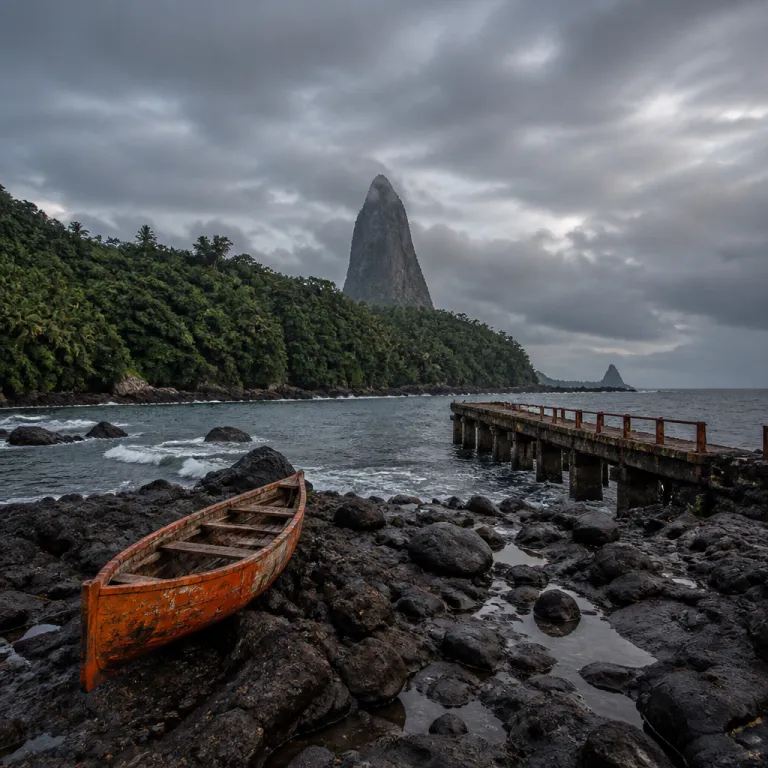
Sao tome principe travel guide for island hoppers
The twin nation of São Tomé and Príncipe sits in the Gulf of Guinea, a compact island country that feels purpose built for slow island hopping. This São Tomé and Príncipe travel guide focuses on how to move between islands, beaches, and forested ridges while still respecting the fragile rhythm of this African archipelago. With an estimated population of around 220,000 people in 2024 spread across the two main islands, you will feel the scale of a place where the next island appears through the salt spray and you already want more time.
On larger São Tomé Island, the capital city of São Tomé curves around a working harbour, with faded Portuguese façades and a low key café culture that anchors any first time visit. This is the practical base of the country, where flights arrive from Lisbon with TAP Air Portugal and STP Airways several times per week, where you find the main market, and where a local guide can help you plan the best route south along the coast or inland toward Pico Cão Grande. The smaller Príncipe Island, often called simply Ilha do Príncipe, lies to the northeast and forms a UNESCO Biosphere Reserve, where jungle covered peaks drop sharply to empty beaches and the natural beauty feels almost exaggerated.
For island hop travelers, the best way to think about this São Tomé and Príncipe travel guide is as two complementary chapters rather than competing destinations. São Tomé Island offers more roads, more villages, and more options for last minute changes, while Príncipe Island rewards those who commit to fewer moves and longer stays. Both islands sit just north of the equator off Central Africa, yet each island’s tempo, from the morning bustle in São Tomé city to the unhurried evenings on Príncipe, will shape how you remember this country.
Reading the islands: sao tome versus principe
São Tomé, the larger island, is where most people start and where this guide São Tomé naturally begins. The capital of São Tomé is the political and cultural centre of the country, and answers the basic question many travelers ask; What is the capital of Sao Tome and Principe?. From here, coastal roads lead south past fishing villages and small praia coves, while inland routes climb toward volcanic ridges that remind you this is a young African landscape.
South of the capital, the shoreline bends toward Praia Micondó and Praia Jalé, two beaches where sea turtles sometimes nest and where the Atlantic feels surprisingly gentle. Along this coast you will find Club Santana, a long established coastal retreat on São Tomé Island that works well as a first stop for anyone building a São Tomé and Príncipe travel guide focused on beaches. The sand here is soft, the water calm enough for swimming, and the mix of Portuguese and African influences in the food gives a clear sense of how the islands evolved from plantation outposts to a more diversified economy.
Príncipe Island, by contrast, is smaller, wilder, and protected as a UNESCO Biosphere Reserve, which makes any Príncipe travel plan feel more curated and less improvised. The main settlement of Santo António is often described as one of the smallest cities in Africa, and its quiet streets and riverside setting make a gentle base between jungle excursions. Above the northern beaches, the historic Belo Monte estate has been restored as an elegant retreat, and its hilltop position gives sweeping views over Praia Banana, a crescent beach that would not look out of place in a guide to the best beaches of the Mediterranean or in a detailed guide to turquoise waters and hidden gems.
Moving between islands: flights, ferries and the joy of almost missing one
Island hopping in São Tomé and Príncipe is less about ticking off islands and more about understanding the limited but characterful connections between them. The short inter island flight between São Tomé and Príncipe usually takes around 35 minutes, and for many travelers it is the most efficient way to link the two main islands in a single trip. Seats are limited, so any São Tomé and Príncipe travel guide that values flexibility will still advise booking this flight early, especially around the best time to visit during the drier months.
There is also a slower, more weather dependent boat connection between São Tomé and Príncipe, which typically runs a couple of times per week and appeals to travelers who like the feeling of the sea defining their schedule. This is where the island hop ethos of almost missing the ferry because you were not ready to leave becomes very real, and where you sense how remote this African country remains despite its Portuguese language and European flight links. If you are drawn to routes where the journey is the story, you may also appreciate reflections on why the next great island hop will not be on any influencer’s feed, because São Tomé and Príncipe still sit well outside the usual social media circuits.
Within São Tomé Island itself, the road south toward the equator line at Ilhéu das Rolas is a classic day or overnight trip, and any guide São Tomé should treat it as a highlight. At the southern tip, a short boat ride crosses to Ilhéu das Rolas, a tiny island São Tomé offshoot where a marker indicates the equator and where the beaches feel almost private. On Príncipe Island, transfers are shorter but no less scenic, with winding roads leading from Santo António to northern coves and to the restored cocoa estate of Belo Monte, and every bend revealing another angle on the islands’ natural beauty.
What to do: roças, rainforest, whales and wild beaches
Any serious São Tomé and Príncipe travel guide must start with the roças, the historic plantation complexes that once powered the colonial economy. Portuguese explorers arrived in the late fifteenth century, and over time the islands shifted from sugar to coffee and finally to cocoa, leaving behind a network of plantation houses, drying terraces, and workers’ quarters that still shape the landscape. Today, several of these roças on São Tomé Island and on Príncipe Island have been repurposed as atmospheric ecolodges and cultural centres, where local guides explain how slave labour and later contract workers built the wealth that never fully stayed in the country.
Inland, the volcanic spine of São Tomé rises toward Pico Cão Grande, a dramatic phonolite tower that has become an emblem of the islands’ natural beauty. Hiking in the surrounding rainforest, often with a local guide, brings you through dense African vegetation, past waterfalls, and into small communities where people still farm cocoa and breadfruit on a modest scale. On Príncipe, jungle treks often start near Santo António and climb toward viewpoints above Praia Banana or other hidden beaches, and the combination of forest, ocean, and low visitor numbers makes this one of the most rewarding islands in Africa for walkers who prefer quiet trails.
Out at sea, the waters around São Tomé and Príncipe host seasonal whale watching, particularly between July and September when migrating humpbacks pass through the Gulf of Guinea, with small local operators running trips from both main islands. Several operators on São Tomé Island and on Príncipe Island run small boat trips that prioritise respectful distances and low impact practices, aligning with the country’s emphasis on sustainable tourism and conservation. Back on land, unhurried afternoons on beaches such as Praia Jalé on São Tomé or Praia Boi on Príncipe will balance the more active days, and remind you that sometimes the best guide is simply the tide chart and the changing light.
Planning your trip: visas, seasons and staying responsibly small scale
From a practical standpoint, São Tomé and Príncipe is a relatively straightforward country to enter for many nationalities, with visa exemptions or visa on arrival policies that a current São Tomé and Príncipe travel guide should always verify before you book. Citizens of several European Union states and some other countries can stay visa free for short visits, while other travelers may need to arrange an e-visa in advance, so checking recent rules with an embassy or official tourism office is essential. Portuguese is the official language, but you will also hear Forro, Cape Verdean Creole, French, Angolar, English, and Lunguyê in markets and on buses, which reflects centuries of movement across Africa and the Atlantic.
The local currency is the dobra, and while some higher end properties on São Tomé Island and on Príncipe Island accept cards, cash remains important once you leave the capital and the main coastal resorts. As a rough guide, simple guesthouses can cost the equivalent of a modest European city hotel night, while mid range coastal lodges and restored roças are priced closer to boutique properties elsewhere in Africa. Climate shapes any island hop itinerary here, and the generally accepted best time to visit runs from June to September, when conditions are drier and slightly cooler.
Outside these months, heavier rains can make some inland tracks on São Tomé Island muddy and can affect the reliability of the boat between São Tomé and Príncipe, though the islands remain lush and the beaches beautifully empty. When planning your own time to visit, consider how much you value clear skies for hiking around Pico Cão Grande versus the deeper greens and fewer visitors that come with the wetter months. Accommodation capacity across the islands is still limited, which is part of why São Tomé and Príncipe remains under the radar compared with other islands in Africa.
On Príncipe, places such as Belo Monte and a handful of other restored roças keep numbers intentionally low, while on São Tomé Island, properties like Club Santana and several smaller guesthouses spread visitors along the coast. This small scale approach means you should book early during the best time windows, but it also ensures that when you stand on a beach near Ilhéu das Rolas or on a headland above Santo António, you will often share the view with more seabirds than people.
Reading the past to travel well now
Understanding the history of São Tomé and Príncipe adds depth to every island hop between São Tomé Island, Príncipe Island, and the smaller islets such as Ilhéu das Rolas. Colonised by Portugal in the fifteenth century, the islands became a testing ground for plantation agriculture in Africa, first with sugar and later with coffee and cocoa, and the roças you visit today are the physical record of that experiment. Independence came after a long colonial period, and the modern state now balances offshore oil exploration, sustainable agriculture, and a carefully managed tourism sector that includes both São Tomé and the more remote island Príncipe.
Walking through the colonnaded halls of a former plantation house on Príncipe or along the waterfront in São Tomé city, you will see how Portuguese architectural lines meet African colours and rhythms. São Toméan citizens today include diverse groups such as Mestico, Angolares, and Forros, and their stories surface in music, food, and the easy conversations that start on a village beach or in a small café. When you use any São Tomé and Príncipe travel guide, remember that the most valuable pages are often the ones written by local people, whether they are explaining how cacao is fermented or pointing out the best praia for a late afternoon swim.
For island hopping travelers used to crowded ferry terminals and over programmed itineraries, São Tomé and Príncipe offer a different template, one that rewards patience and curiosity more than checklists. This is an archipelago where the best guide São Tomé can give you is sometimes a fisherman’s advice about the sea that day, and where a Príncipe travel plan might change because a community festival appears in Santo António’s main square. If you are looking for other seasonal island ideas once you have mapped your time here, you can explore how certain islands own peak season and compare those rhythms with the quieter, steadier tempo of São Tomé and Príncipe.
FAQ
What is the capital of São Tomé and Príncipe ?
The capital is São Tomé, a compact coastal city on São Tomé Island that serves as the political, economic, and transport hub of the country. Most international flights arrive here, and it is the logical starting point for any São Tomé and Príncipe travel guide focused on island hopping. From São Tomé city, you can connect by domestic flight or boat to Príncipe and by road to key beaches and roças.
What languages are spoken on the islands ?
Portuguese is the official language of São Tomé and Príncipe, reflecting centuries of colonial history. You will also hear local languages such as Forro, Cape Verdean Creole, Angolar, and Lunguyê, as well as some French and English in tourism settings. Learning a few basic Portuguese phrases will make interactions with local people smoother and enrich your time on both islands.
When is the best time to visit São Tomé and Príncipe ?
The generally recommended best time to visit runs from June to September, when the weather is drier and slightly cooler. These months are ideal for hiking around Pico Cão Grande, exploring rainforest trails on Príncipe, and enjoying clearer conditions on the beaches. Outside this period, heavier rains can affect some inland routes and boat schedules, but the islands remain lush and less crowded.
How do you travel between São Tomé and Príncipe ?
The main connection between São Tomé Island and Príncipe Island is a short domestic flight that usually takes around 35 minutes and runs several times per week, typically operated by the national carrier. There is also a slower boat service, which operates less frequently and is more dependent on sea conditions but appeals to travelers who value the maritime aspect of island hopping. Because capacity is limited on both options, it is wise to secure tickets in advance, especially during the best time windows.
Is São Tomé and Príncipe suitable for responsible, small scale tourism ?
São Tomé and Príncipe have deliberately kept tourism relatively small, with a focus on sustainable practices and the preservation of natural beauty, particularly on Príncipe’s UNESCO Biosphere Reserve. Many properties are converted roças or low rise coastal retreats that work closely with local communities and limit guest numbers. For travelers who value low impact stays and authentic contact with local people, this archipelago offers one of the most responsible island hopping experiences in Africa.
Trusted references
For further factual background and practical updates, consult The World Factbook, the official tourism information from the government of São Tomé and Príncipe, and in depth destination features from established travel publications such as Lonely Planet or National Geographic Traveler.