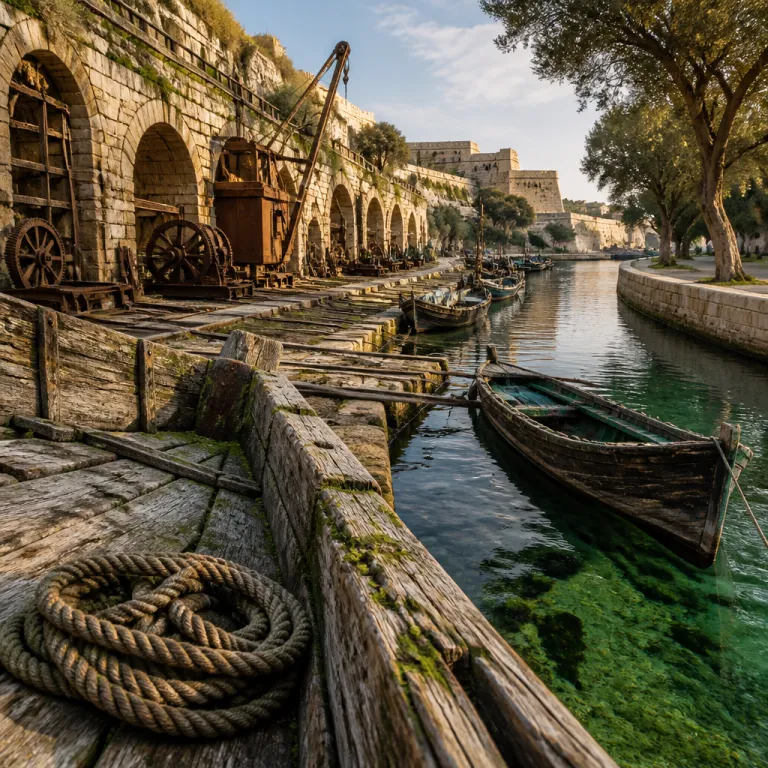
Malta maritime heritage harbor walk: from bastions to boat wakes
The most rewarding Malta maritime heritage harbor walk begins high on Valletta’s bastions, where the capital city looks straight across the Mediterranean Sea to the fortified inlets of the Three Cities. From the Upper Barrakka Gardens terrace, the view of Grand Harbour frames every island Malta story at once, from ancient Phoenician traders to the thunder of the Second World War convoys, making this one of Europe’s most layered urban seascapes. Stand here at sunset and you feel how the sea, the city and the wider country have always negotiated power, trade and survival in a remarkably tight amphitheatre of stone and water.
As you follow a self-guided route along the ramparts, the walk becomes a living guide to Malta’s maritime history, with plaques, bastions and dry moats narrating how the Knights of Saint John, often called the Knights of Malta, turned this island into a maritime fortress. Each corner reveals another angle on Grand Harbour, where azure waters carry working tugboats, cruise ships and traditional craft side by side, showing how maritime heritage and contemporary activities coexist. The contrast between the monumental walls and the small, brightly painted boats below is striking, and it underlines how the Maltese relationship with the sea is both strategic and intimate.
Drop down by lift or stair to the waterfront and the harbor walk shifts scale, bringing you to the level of the waterline cafés and stone arches of Valletta’s historic quays. Here you hear English, Italian and Maltese in equal measure, as business travellers turned island hoppers pause between meetings and ferry crossings, using this shoreline stroll as a reset before heading to Gozo or Comino. A Valletta resident might tell you, “We meet friends by the sea, not in the square,” and for a business leisure traveler this is where Malta travel starts to feel less like a conference destination and more like a Mediterranean island hub, with a wide range of onward routes opening up across the sea.
Crossing to the Three Cities: a harbor walk through six centuries
The most atmospheric way to continue your Malta maritime heritage harbor walk is to cross Grand Harbour itself in a traditional dgħajsa water taxi. These low wooden boats, once the workhorses of the shipyards, now shuttle quietly between Valletta and the Three Cities, allowing you to explore the harbor’s maritime history from the surface of the sea rather than from a bus window. The short crossing is calm yet cinematic, usually taking under ten minutes, and it gives you a close look at the layered fortifications that once guarded every approach to this strategic Mediterranean inlet.
On the Birgu waterfront, the pace slows and the narrative deepens, as the city streets narrow and the stone darkens with age, reminding you that this was the first capital city of the Knights of Saint John. Here, the island’s maritime heritage is not curated behind glass alone; it is embedded in the slipways, arches and former arsenals that line the quays, many now repurposed as restaurants and galleries that serve as informal guide points for Malta travel. You can walk from a former naval bakery to a contemporary wine bar in minutes, seeing how the country is making careful use of its historic fabric while keeping the working port alive.
For an executive traveler extending a business stay, this side of Grand Harbour offers a different kind of island activity, less about beaches and more about context, strategy and perspective. It is easy to structure a half day here around meetings in Valletta and a late afternoon harbor walk, especially if you plan your timings with the same precision you would apply to a two week island hop across Southeast Asia without a fixed itinerary, using ferry schedules as your framework. In this compact corner of Malta, the rhythm of arrival and departure is written into the streets, and the harbor itself becomes your most reliable guide to the islands.
The old shipyards of Cospicua: cranes, dry docks and new cultural life
Continue your Malta maritime heritage harbor walk south along the waterfront and you reach the old shipyards of Cospicua, where the industrial scale of Grand Harbour comes into focus. Here, dry docks and cranes still rise above the quays, a reminder that this island’s maritime history is also a story of labour, engineering and ship repair. Walking the perimeter of the shipyard district gives you a sense of how deeply the sea has shaped the economic life of this small country.
Today, Palumbo Shipyards manages much of this complex, and the official line is clear: "Ship repair, maintenance, and conversion." That concise description captures only part of the picture, because the modernization of facilities and the partnership between the Palumbo Group and the Maltese government are also making space for new cultural venues, restaurants and galleries in former workshops. As maritime tourism grows as an alternative to pure beach travel, these repurposed spaces allow visitors to explore Malta’s maritime heritage at working scale, not just in museum form.
For island hopping travelers used to the ferry based rhythms of Caribbean routes, as outlined in many guides to island hopping the Caribbean by ferry, Grand Harbour offers a different template, one where industrial and historic layers sit almost on top of each other. You can stand on a quay watching a superyacht refit in one dry dock while, a few minutes’ walk away, a former warehouse hosts an exhibition on Mediterranean maritime history. This juxtaposition makes the Malta maritime heritage harbor walk particularly appealing to business leisure visitors, who often appreciate seeing how a port continues to function as a strategic node in the wider Mediterranean Sea.
Traditional Maltese boats and the Malta Maritime Museum
No Malta maritime heritage harbor walk is complete without time spent with the traditional boats that still animate these azure waters. The brightly painted luzzu, with its distinctive pair of eyes on the prow, remains a working fishing boat on many parts of the island, while in Grand Harbour you are more likely to see the sleeker dgħajsa acting as a water taxi between Valletta and the Three Cities. Both types of craft speak to an ancient seamanship that predates the arrival of the Knights of Malta and continues to shape daily activities Malta wide.
In Birgu, the Malta Maritime Museum anchors this narrative, offering a structured guide to Malta’s maritime history from ancient anchors to modern ship models. Housed in a former naval bakery, the museum traces how the island Malta evolved from a Phoenician outpost to a stronghold of the Knights of Saint John and later a key base for the Royal Navy, with each era leaving its mark on the harbor’s infrastructure. Exhibits on navigation, artillery and trade routes help you understand why this small country has always punched above its weight in Mediterranean affairs.
For travelers who appreciate context, the museum also highlights how maritime heritage intersects with wider cultural themes, from religious processions on the sea to the art of winemaking that flourished as Maltese merchants traded across the Mediterranean Sea. While Malta’s UNESCO heritage sites, such as the megalithic temples inscribed on the World Heritage List, often dominate headlines, Grand Harbour’s layered story is equally compelling for those who like to explore beyond the obvious. A well planned visit here, combined with a harbor walk and a short dgħajsa crossing, turns a simple city break into a nuanced Malta travel experience.
Fitting Malta into a wider island hop: Gozo, Comino and beyond
One reason the Malta maritime heritage harbor walk resonates with island hopping travelers is that it sits at the crossroads of several compelling onward routes. From Valletta’s bus and ferry terminals, you can reach the northern ports in under an hour, then board the frequent Malta Gozo ferry to continue your journey across the archipelago. The crossing to Gozo is short yet scenic, with views of Comino and its famous Blue Lagoon, where azure waters contrast sharply with the honey coloured cliffs of this smaller island.
Gozo itself offers a quieter counterpoint to the capital city, with rural landscapes, small fishing villages and a slower tempo that suits a second or third stop on a Mediterranean island itinerary. Many business travelers now structure Malta travel so that meetings cluster in Valletta early in the week, followed by a night or two on Gozo, using the ferry as a decompression corridor between work and leisure. On the way, a brief stop on Comino for swimming or kayaking adds light activities to a trip otherwise focused on maritime heritage and urban history.
For those who like to compare harbor walks across regions, it is worth reading in depth guides to European coastal islands, such as analyses of Kefalonia’s beaches and coastal paths, before arriving in Malta. This helps you appreciate how Grand Harbour differs from more purely scenic bays, offering a blend of working port, fortified city and layered maritime history that is hard to match. From here, fast ferries and flights connect onward to Sicily and other Mediterranean hubs, making Malta well placed as both a starting point and a midpoint in a wider island hopping strategy.
FAQ
How long should I allow for the Malta maritime heritage harbor walk ?
Plan at least half a day for the full Malta maritime heritage harbor walk, including Valletta’s bastions, a dgħajsa crossing and time in the Three Cities. If you want to visit the Malta Maritime Museum and explore the old shipyards area on foot, a full day allows a more relaxed pace. Business travelers often split the walk into two shorter sessions, one around Valletta and one focused on Birgu and Cospicua.
Where is the Malta Maritime Museum and what does it focus on ?
The Malta Maritime Museum is located on the waterfront in Vittoriosa, also known as Birgu, one of the historic Three Cities facing Valletta across Grand Harbour. Its collections cover Malta’s maritime history from ancient times through the era of the Knights of Saint John and the British naval presence. Exhibits range from ship models and artillery to navigation instruments and artifacts from the island’s long relationship with the Mediterranean Sea.
Can I visit the old shipyards of Malta as a casual traveler ?
The Cospicua shipyard area remains an active industrial zone managed by Palumbo Shipyards, so access is partly restricted for safety and operational reasons. However, you can walk along adjacent streets and waterfront sections that overlook the dry docks and cranes, gaining a clear sense of the site’s scale and ongoing role in ship repair. Some former workshops nearby have been converted into cultural and hospitality spaces, which are open to the public and integrate well into a harbor walk.
How does Malta fit into a multi island Mediterranean itinerary ?
Malta works well as both a standalone destination and a hub within a wider Mediterranean island hop, thanks to frequent connections to Gozo, Comino and nearby Sicily. The compact size of the country means you can combine meetings in the capital city with maritime heritage activities and short ferry trips within a few days. Many travelers pair Malta with other islands that offer different emphases, such as beach focused stays in Greece or wine centered visits in Sicily, creating a balanced itinerary.
What should I wear and plan for when walking around Grand Harbour ?
Wear comfortable shoes, because the Malta maritime heritage harbor walk involves cobbled streets, staircases and uneven stone surfaces around the fortifications. Check opening hours for specific sites such as the Malta Maritime Museum and any galleries or restaurants in repurposed dockyard buildings, as these can vary by season and day of the week. In warmer months, carry water and sun protection, since many sections of the walk are exposed to direct Mediterranean sun and reflected heat from the stone walls.
References
UNESCO World Heritage Centre; Malta Tourism Authority; International Council on Monuments and Sites (ICOMOS); Malta Maritime Museum; Palumbo Shipyards.