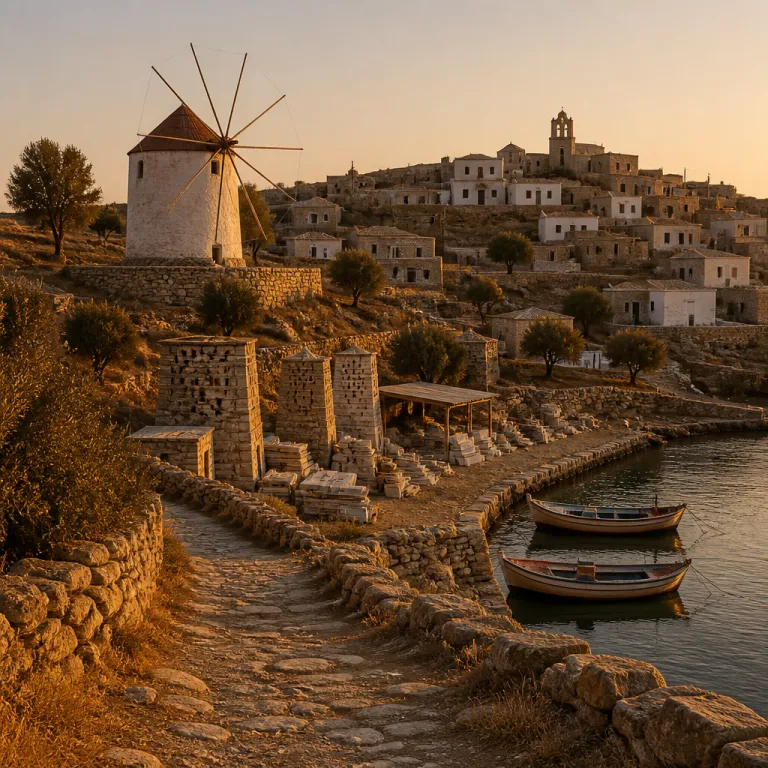
Why Tinos island belongs on a serious Greece travel itinerary
Tinos sits quietly in the Cyclades, an island that has watched ferries speed toward Mykonos while it kept its own slower rhythm. This is the essence of Tinos as a Greek island destination; a place where the soundscape is church bells, wind in the terraces, and chisels on marble rather than bass lines from a beach bar. When you plan to visit Tinos as part of a wider Greek islands route, you are choosing a place that values craft, pilgrimage, and village life over spectacle.
The distance between Tinos and Mykonos is only about 15 km, and the ferry crossing between the islands usually takes 15 to 35 minutes. That short hop makes it tempting to treat Tinos as a day trip from Mykonos, yet the contrast between each island could not be sharper, especially once you step into a quiet village square and feel how different the pace is. Tinos is noticeably less expensive than Mykonos, with typical taverna meals often costing around €12–€18 per person instead of the €25–€40 you might pay on its glamorous neighbour, which reshapes how many days you can comfortably spend on this Greek island without watching every bill.
For couples planning a refined Greece travel circuit, the question is not whether Tinos is worth visiting, but how much time to allocate between the islands. Mykonos excels at nightlife, beach clubs, and a cosmopolitan town scene, while Tinos offers marble carving workshops, dovecote architecture, and a main town anchored by pilgrimage rather than parties. Combining both islands in one travel guide style itinerary gives you the best of the Cyclades; you arrive for the energy of Mykonos, then exhale on Tinos when you realise you finally have space to breathe.
The argument for three or four days on Tinos, not a rushed day trip
Many travelers still frame visiting Tinos as a quick escape from Mykonos, a single day to tick off another island. That approach misses the layered character of this Cycladic island, because it reveals itself slowly through its villages, its light, and the way the wind shifts across each valley. To feel why Tinos is worth visiting, you need at least three days and ideally four, with time to wander Tinos town, drive a car into the hills, and linger on more than one beach.
On day one, base yourself near the main town so you can walk up to the Church of Panagia Evangelistria and then drift down through the lanes of Tinos town toward the harbour. This is where the contrast with Mykonos town is most striking; cafés are filled with local families, fishermen mend nets beside visitors, and the evening promenade feels authentically Greek rather than staged for cameras. A good Tinos travel guide will always suggest an unhurried first evening here, letting you adjust to the island’s tempo before exploring the villages.
Day two belongs to the marble villages, where the island shows its craftsmanship in stone lintels, fountains, and sculpted doorframes. Drive a small car up to the village Kardiani, often simply called Kardiani, and then continue to other villages like Pyrgos and Isternia, each with its own marble square and view toward the sea. Spend time in these villages rather than rushing; the best conversations happen when you pause at a café table, ask a local about their craft, and realise that this Greek island measures time in generations, not in ferry departures.
By day three, you will want the sea, and this is when beaches like Rochari beach and Vourni beach come into focus. Rochari beach in the north offers a wide bay, sculpted rocks, and a relaxed beach bar scene that feels worlds away from the choreography of Mykonos, while Vourni beach near the new Odera Tinos property is more intimate and sheltered. A thoughtful travel guide to the Greek islands will encourage you to leave space for a fourth day, because once you have watched the sunset from a quiet beach on Tinos, you rarely feel ready to board the next ferry.
For readers who enjoy planning multi stop journeys, it is worth looking at how other archipelagos manage slow travel, such as the public ferry routes described in a Scandinavian archipelago island hopping guide. The lesson carries across; the most rewarding experiences on Tinos come when you treat the island as a stay, not a stop. Give yourself days, not hours, and the island will meet you halfway.
Odera Tinos and the new language of Cycladic luxury
The opening of Odera Tinos has quietly rewritten how couples think about staying on this island, because it finally offers a luxury property that matches the local character. Set above Vourni bay on the southwest coast of Tinos, with direct access to a small private beach, the hotel combines a generous collection of rooms and pool suites with a spa, fitness area, and restaurant that leans into seasonal Cycladic produce. The architecture uses stone, light, and landscape to frame the sea and the hills rather than competing with them, so the resort feels rooted rather than imported.
Staying here makes it easy to balance beach time and exploration, since Vourni beach is on your doorstep and the main town of Tinos is a short drive away by car or taxi, usually around 10–15 minutes. You can spend long days between the pool, the sea, and a discreet beach bar, then head into Tinos town for dinner in a local taverna where the menu still reflects what came off the fishing boats that morning. One evening, for example, you might order grilled octopus, a simple horiatiki salad, and a carafe of local wine for under €25 per person, then watch families stroll the promenade as the ferries come and go.
Odera Tinos also changes how you might structure a multi island trip, because it gives Tinos a clear role alongside Syros, Naxos, or Mykonos. You might start with two nights in Mykonos town for energy, then move to three or four nights at Odera Tinos for quiet, before continuing to another Greek island that suits your style. When you book stay options on Tinos now, you can choose between design forward guesthouses like Xinara House, contemporary villas such as Pnoēs Tinos, and the full service environment of Odera Tinos, each adding a different note to your time on the island.
For travelers who care about maritime heritage and harbour walks as much as they care about rooms and pools, the layered history of the Aegean can be as compelling as any spa menu. Articles that explore working waterfronts, such as a piece on Mediterranean harbour walks and old shipyards, show how ports shape an island’s identity over time. Tinos town’s harbour may be quieter than Malta’s grand docks, yet it plays the same role in daily life, reminding you that every ferry arrival is part of a longer story.
Villages, marble, and the cultural heart of Tinos
What sets Tinos apart is not a single beach or town, but the network of villages that climb its hillsides. Each village feels like a self contained world, with its own square, church, and rhythm, yet together these settlements form the cultural heart of the island. When you visit Tinos with time to spare, you begin to understand how marble, faith, and agriculture have shaped this corner of Greece for centuries.
Kardiani is often the first stop on any serious travel guide to the island, perched above the sea with stone houses, shaded alleys, and views that stretch toward other Greek islands on the horizon. The village Kardiani is also a good base for walks, leading you along old paths to neighbouring villages where dovecotes punctuate the landscape like sculptures. Further inland, villages such as Volax, with its boulder strewn surroundings, and Pyrgos, known for its marble workshops and cemetery sculptures, show why Tinos is considered a cradle of Greek marble craftsmanship.
In these villages, the best experiences are small; a coffee with a local sculptor, a plate of tomatoes and capers in a family run café, a conversation about how the wind shapes daily life on this Greek island. A thoughtful Tinos travel guide will encourage you to slow down, park the car at the edge of the village, and walk in on foot so you can appreciate the details carved into doorframes and fountains. Over a few days, you start to see how marble is not just a material here, but a language that runs from church icons to everyday objects.
For couples who enjoy weaving culture into their island hopping, Tinos pairs well with destinations that also foreground craft and history rather than only beaches. You might combine a stay at Xinara House, set in a historic village beneath Exomvourgo, with a later visit to Pnoēs Tinos near the sea, creating a narrative that moves from hilltop to shoreline. If you are curious about extending this approach beyond Greece travel, consider reading an elegant guide to safari and Zanzibar island hopping, which applies the same principle of balancing movement and stillness across very different islands.
Designing an island hopping route where Tinos is the anchor
Planning Tinos as part of a wider Cyclades journey is about more than counting islands on a map. You are designing a sequence of moods; the bright intensity of Mykonos, the cultural density of Syros, the open landscapes of Naxos, and the crafted calm of this quieter island. The key is to let Tinos act as an anchor, a place where you stay long enough that the idea of almost missing the ferry feels like a compliment to the island.
Ferries link Tinos with Mykonos, Piraeus, and Rafina, which makes it easy to slot the island into different Greece travel routes depending on how much time you have. Operators such as Blue Star Ferries, Golden Star Ferries, and Fast Ferries typically run services from morning through late afternoon in high season, so you can choose crossings that match your preferred pace. One good itinerary for couples might be two days in Mykonos town, three or four days visiting Tinos with a stay at Odera Tinos or a village house like Xinara House, then several days on Naxos for hiking and long beaches. Another travel guide style route could pair Tinos with Syros, focusing on culture, marble, and town life rather than chasing the next beach bar across the Greek islands.
Whichever route you choose, treat Tinos as a place to deepen rather than to skim. Spend days alternating between Tinos town, the marble villages, and beaches such as Rochari beach and Vourni beach, adjusting your pace to the island instead of imposing your own. When travelers ask, “How far is Tinos from Mykonos?” the factual answer is clear; “How far is Tinos from Mykonos? Approximately 15 km; a 15–35 minute ferry ride.”
The more interesting answer is emotional; Tinos is as far from Mykonos as you want it to be, depending on whether you are chasing nightlife or looking for a Greek island where craftsmanship and quiet still matter. When people wonder if Tinos is less expensive than Mykonos, the data is straightforward; “Is Tinos less expensive than Mykonos? Yes, Tinos is generally more affordable across accommodation, dining, and daily expenses.” Those differences, combined with the island’s cultural depth, are why visiting Tinos is increasingly seen as not just an add on, but the best part of a Cyclades journey.
FAQ about Tinos island Greece travel
How many days should I spend on Tinos during an island hopping trip ?
Plan for at least three days on Tinos, and four if you can, so you have time for Tinos town, several villages, and more than one beach. A shorter stay risks reducing the island to a quick checklist, which does not reflect its depth. With three to four days, you can balance cultural visits, marble villages, and relaxed afternoons by the sea.
Is Tinos worth visiting if I am already staying on Mykonos ?
Tinos is absolutely worth visiting, especially if you value authentic Greek culture, quieter villages, and lower prices than Mykonos. The short ferry ride makes it easy to add, but the island rewards a proper stay rather than a rushed day trip. Many travelers now structure their Greece travel so that Tinos becomes the calm counterpoint to Mykonos.
What is Tinos best known for compared with other Greek islands ?
Tinos is known for its marble carving tradition, dovecote architecture, and its role as a major pilgrimage site in Greece. Unlike some Greek islands that focus on nightlife, Tinos emphasises craftsmanship, village life, and religious heritage. This makes it particularly appealing for couples seeking a more reflective style of island hopping.
Do I need a car on Tinos, or can I rely on taxis and buses ?
You can reach Tinos town and the main pilgrimage church on foot from the port, but a car is very helpful for exploring villages and beaches. Public buses connect some areas, yet many of the best marble villages and coves are easier to reach with your own wheels. For a short stay of a few days, renting a small car usually offers the most flexibility.
How does Tinos fit into a multi island itinerary with Syros, Naxos, or Mykonos ?
Tinos works well as the cultural and contemplative stop in a Cyclades itinerary that also includes more energetic or beach focused islands. You might pair Mykonos for nightlife, Tinos for villages and marble, and Naxos for long sandy beaches and hiking. The ferry links between these islands are frequent enough that you can design routes where Tinos becomes the anchor rather than the afterthought.