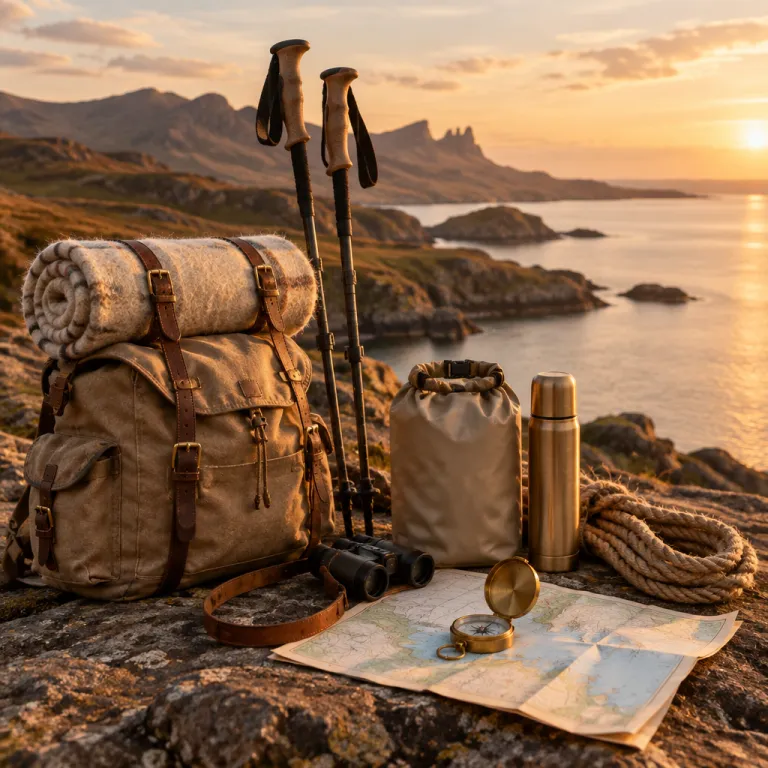
Why Isle of Skye hikes belong on every island hopping itinerary
The Isle of Skye sits off the west coast of Scotland and offers a rare blend of coastal drama and mountain character. For travellers moving between islands, it bridges sea and summit, turning each hike into a sequence of tidal inlets, basalt cliffs, and inland ridges that feel like separate isles. You will find that these walks on Skye link naturally with ferry routes across the Hebrides, creating a continuous narrative of sea crossings and shore-to-summit routes.
Among all Scottish islands, Skye stands out because its hikes compress big mountain views into manageable distance and time. Classic routes such as the Old Man of Storr, the Quiraing on the Trotternish Ridge, and the paths above the Fairy Pools can be completed in a half day, yet they deliver scenery that rivals longer expeditions on the mainland. This makes Isle of Skye hikes ideal for visitors who balance sailing schedules, limited daylight, and the wish to sample several isles in a single journey.
Think of Skye as a natural hub where the Skye Trail, coastal walks, and short ridge scrambles all radiate from a single island base. One day you might hike a clifftop route towards Neist Point Lighthouse, while the next day you explore the Fairy Glen or Loch Coruisk by boat and foot. With careful planning of distance, time, and transport, you will turn Skye into the anchor point of a wider archipelago adventure rather than a standalone stop.
Planning Isle of Skye hikes within a wider island hopping route
Travellers who are used to quick mainland journeys often underestimate how long a hike on Skye will take once ferry timetables, single-track roads, and weather delays are included. When you plan your route, always add at least thirty percent to the estimated distance and time, especially if you are driving from one car park to another between hikes. This buffer allows you to enjoy the views rather than rush back to the harbour or miss a sailing to the next isle.
For a compact itinerary, pair a morning walk at the Fairy Pools with an afternoon hike on the Quiraing section of the Trotternish Ridge. Both hikes offer some of the best views on the Isle of Skye, yet each can be completed in three to four hours of steady hiking, leaving room for a relaxed evening in Portree before your next island crossing. A typical day might look like this: Fairy Pools car park by 9:00, back at the car by 12:00, lunch and the drive north, then start the Quiraing circuit around 14:00 and finish in time for dinner.
If you are following a multi-day Skye Trail style journey, break it into shorter stages so that each day aligns with your ferry or boat transfers to other isles. Those who enjoy structured planning will find detailed island-hopping hiking ideas in this guide to hiking trails and immersive activities across archipelagos. Use it to compare Skye hikes with routes on neighbouring islands, then decide where a mountain leader might be useful, especially for sections near the Cuillin Ridge or remote headlands such as Rubha Hunish. Treat Skye as one chapter in a longer blog post written by your own footsteps across the Hebrides, with each hike adding a new paragraph of coastline, cliff, or ridge.
Signature Isle of Skye hikes for island hoppers with limited time
When your island-hopping schedule is tight, focus on a few signature hikes that capture the essence of Skye without demanding full days. The Old Man of Storr, often written as the Old Man Storr, is the obvious starting point because its steep but short trail climbs quickly to panoramic views over the Sound of Raasay and distant isles. Most walkers complete this hike in around two hours, depending on pace, photo stops, and how far they continue along the ridge path.
The Fairy Pools near Glenbrittle offer another compact route that suits travelers moving between isles by car and ferry. From the main Fairy Pools Car Park on the Glenbrittle road, a well-trodden trail follows the river towards a chain of crystal-clear pools and small waterfalls that sit beneath the dark outline of the Cuillin. Allow at least two hours of walking time, then add extra time if you plan to swim, photograph reflections, or extend the hike towards the lower slopes of the Cuillin Ridge.
For a coastal contrast, Neist Point is a classic walk that leads to dramatic cliffs and the iconic Neist Point Lighthouse. The route begins near a clifftop parking area at the end of the B884 and descends on a concrete path before undulating towards the lighthouse, with constant views across the sea to other isles that tempt future island hopping. One local guide summed it up simply: “If you only have one evening on Skye, make it Neist Point in good weather.” You can read more about combining such coastal walks with refined island experiences in this feature on island hopping adventures and hiking trails across stunning archipelagos, which helps you decide which Skye hikes fit best into a multi-island journey.
Advanced routes, ridges, and the role of a mountain leader
Beyond the popular walks, Skye offers serious mountain routes that demand respect, experience, and sometimes professional guidance. The Cuillin Ridge is the most famous of these, a serrated skyline that many hikers admire from below during shorter hikes near the Fairy Pools or Loch Coruisk. Traversing the full Cuillin Ridge is a technical mountaineering challenge, not a casual hike, and island-hopping visitors should treat it as a specialist objective rather than a spontaneous day out.
Sections of the Skye Trail also venture into remote terrain where navigation can be complex in poor visibility. If you plan to link multiple ridges or attempt longer hikes isle-wide, consider hiring a qualified mountain leader who knows the Cuillin, the Trotternish Ridge, and the coastal routes intimately. A good guide will manage distance, timing, and safety while you focus on the views, the changing light over the sea, and the sense of moving from isle to isle even while staying on Skye.
Advanced island-hopping itineraries sometimes include a boat trip to Loch Coruisk, followed by a demanding hike back towards Sligachan under the Cuillin. This route crosses rough, rocky ground where the trail is faint and the hours required can exceed expectations, especially when carrying overnight gear between isles. If you are unsure whether a planned hike is within your ability, err on the side of caution and choose one of the best hikes on the Trotternish Ridge or around Rubha Hunish instead, where escape options and clear paths make the experience more forgiving.
Logistics, parking, and timing for seamless island hopping on Skye
Efficient logistics turn good Isle of Skye hikes into great ones, especially when your wider journey spans several isles. Start by mapping each hike, its car park, and the nearest ferry terminal, then calculate realistic distance and time between them on single-track roads. This approach prevents the common mistake of planning a late afternoon walk at Neist Point after a long drive from the Fairy Glen or the Old Man of Storr.
Parking can be tight at headline locations such as the Fairy Pools, the Old Man of Storr, and the Quiraing on the Trotternish Ridge. Arrive early or late in the day to secure a space, and always carry coins or a card for paid parking, as this small detail will save time and stress when you are moving quickly between isles. When a car park is full, have a secondary hike in mind, perhaps a quieter section of the Skye Trail or a coastal walk near Rubha Hunish, so that your day remains productive.
Island hopping often means compressing several hikes into a short window, but resist the urge to stack too many routes into one day. A single high-quality hike with generous hours for pauses, photos, and weather changes will feel richer than three rushed walks that blur together. If you must choose, prioritise the best hikes that align with your ferry schedule and the direction of your wider route through Scotland, then return to Skye on a future island journey to explore the trails you missed.
Coastal magic, hidden glens, and linking Skye with other isles
Some of the most atmospheric Isle of Skye hikes unfold not on high ridges but along the coast and in tucked-away valleys. The Fairy Glen near Uig offers a short, whimsical walk through grassy knolls and miniature ridges that feel like a model of the larger Trotternish Ridge above. This magical place suits island-hopping travelers who want a brief leg stretch between ferry crossings, with views that hint at the wilder landscapes waiting elsewhere on the isle.
At the northern tip of Skye, Rubha Hunish provides a superb coastal hike with sweeping views towards the Outer Hebrides and the mainland of Scotland. The trail begins near a modest parking area off the A855 north of Duntulm and leads across moorland to cliffs where you will find seabirds, occasional dolphins, and a sense of standing at the edge of several isles at once. On clear days, this walk feels like a live map of your island-hopping route, with each distant isle marking a potential future hike.
When you are ready to blend Skye with other islands, look for ferry links that allow a morning hike followed by an afternoon sailing. A day might start with a brisk walk to Neist Point Lighthouse, continue with a drive to Uig or Armadale ferry terminals, and end with a sunset crossing towards another isle where new hikes await. For more refined ideas on how to balance hiking with coastal culture, dining, and slower island time, consult this guide to elegant ways to enjoy island time, then adapt its principles to the wilder context of Skye and the Hebrides.
Using Isle of Skye hikes to deepen your island hopping narrative
Thoughtful hikers treat each route on Skye as a chapter in a longer island-hopping story rather than a checklist of summits. A short hike to the Old Man of Storr might introduce you to the interplay of sea and cliff, while a later walk along the Skye Trail reveals how the isle connects to neighbouring islands through history, geology, and ferry lines. Over several days, you will find that repeated views of the Cuillin, Neist Point, and the Trotternish Ridge create a sense of familiarity that anchors your wider journey across multiple isles.
Writing a personal blog post or travel journal about your hikes isle-wide can help you refine future itineraries. Note the distance and time for each route, the condition of the trail, and how the weather affected your experience, then compare Skye with other Scottish isles you visit. This reflective approach turns raw data such as hours walked, parking details, and route choices into practical wisdom that benefits your next island-hopping adventure.
As you move from one magical place to another, remember that the best hikes are not always the longest or steepest. Sometimes a gentle walk above Loch Coruisk, a sunset stroll towards Neist Point Lighthouse, or a quiet hour in the Fairy Glen will shape your memory of Skye more than a demanding day near the Cuillin Ridge. By balancing ambition with attention, you allow each isle, each hike, and each ridgeline to contribute fully to the evolving story of your travels across Scotland’s islands.
Key figures and practical statistics for Isle of Skye hikes
- The Old Man of Storr hike typically covers around 4 kilometres return, with approximately 250 metres of ascent, and most walkers complete it in 1.5 to 2.5 hours depending on fitness and photo stops. These figures broadly match route descriptions published by WalkHighlands and other Scottish hiking resources.
- The Fairy Pools route from the main car park to the upper pools and back is roughly 3 to 5 kilometres, with modest elevation gain, and visitors often spend 2 to 3 hours including time for swimming and photography. Timings are similar to those suggested by popular Scottish walking guides.
- The Quiraing circuit on the Trotternish Ridge is about 6 to 7 kilometres with 350 metres of ascent, and average hiking time ranges from 3 to 4 hours in dry conditions. Distances and ascent figures are consistent with data used by the Scottish Mountaineering Club and WalkHighlands.
- The coastal walk to Neist Point Lighthouse is approximately 3 kilometres return, but the steep sections and repeated climbs mean many visitors allow 1.5 to 2 hours for the route. This estimate reflects common advice from local rangers and established walking websites.
- Boat access to Loch Coruisk from Elgol usually takes around 45 minutes each way, and combining the boat journey with a shore walk often results in a total outing of 4 to 6 hours. Operators and Transport Scotland advisories recommend checking sailing times in advance, especially outside peak season.
FAQ about Isle of Skye hikes for island hoppers
How many days should I spend on the Isle of Skye for hiking during an island hopping trip ?
For island-hopping travelers, three full days on Skye usually allow time for several classic hikes such as the Old Man of Storr, the Fairy Pools, and a section of the Trotternish Ridge. With five days, you can add coastal walks like Neist Point and Rubha Hunish, plus a boat and hike combination at Loch Coruisk. Shorter visits are possible, but you will need to prioritise one or two key routes that fit your ferry schedule.
Do I need a mountain leader for Isle of Skye hikes ?
You do not need a mountain leader for straightforward routes such as the Fairy Pools, Neist Point, or the Old Man of Storr in good weather. A qualified guide becomes valuable for more complex terrain, including sections of the Cuillin Ridge, remote parts of the Skye Trail, or long crossings near Loch Coruisk. If you lack experience in navigation, scrambling, or rapid weather changes, hiring a professional is a wise investment.
What is the best season for hiking on the Isle of Skye while island hopping ?
The most reliable conditions for Isle of Skye hikes usually occur from late spring to early autumn, when daylight is long and trails are less boggy. Shoulder seasons offer fewer crowds at popular car parks and viewpoints, which suits island-hopping travelers who value flexibility. Winter hiking is possible but demands experience, proper equipment, and careful attention to weather and ferry disruptions.
How do I combine Skye hikes with visits to other Scottish isles ?
Many travelers approach Skye as a central hub within a wider Hebridean route, linking it with isles such as Raasay, Harris, and Lewis. Plan your hikes around ferry timetables, allowing half days for travel and half days for shorter walks near ports or main roads. Using Skye’s mix of quick viewpoints and longer ridge routes, you can adjust each day according to sea conditions and transport changes.
Are the popular hikes on Skye suitable for children or less experienced walkers ?
Several well-known routes, including the Fairy Glen, parts of the Fairy Pools path, and the Neist Point walk, can suit active children and less experienced hikers in good weather. Steeper or more exposed hikes such as the full Quiraing circuit or higher sections near the Cuillin require greater care, suitable footwear, and realistic assessment of distance and time. Always check the forecast, carry warm layers, and be prepared to shorten the route if conditions deteriorate.
Suggested sources for further planning and safety information : Scottish Mountaineering Club, Mountaineering Scotland, and the official Walkhighlands website.