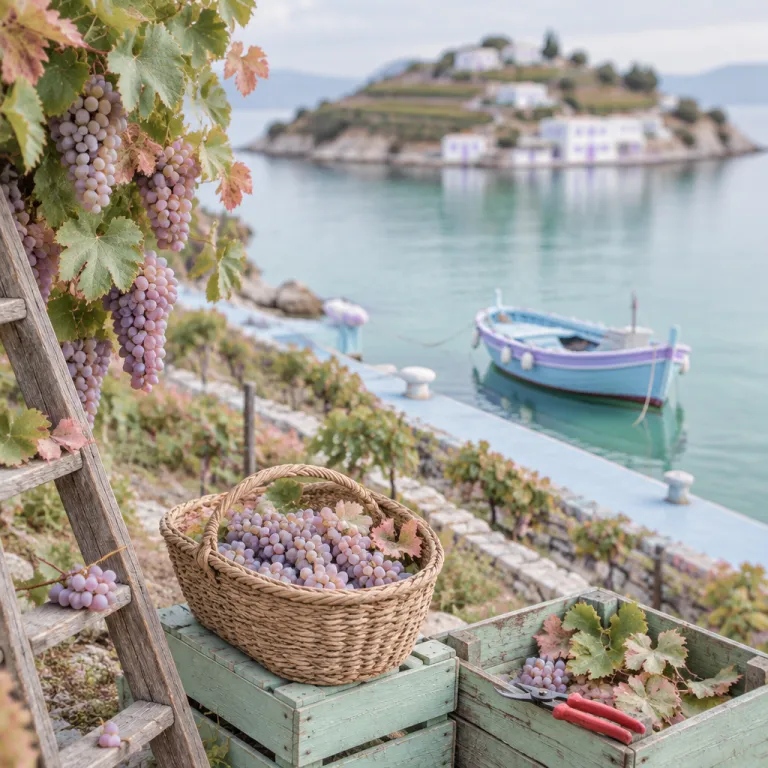
When the island wine harvest autumn replaces the beach day
By early October, the island wine harvest quietly takes over the Mediterranean shoreline. On Santorini, the last swimmers linger in coves below Oia while, just inland, the first crates of Assyrtiko grapes arrive at the nearest vineyard and the entire island shifts from sun worship to harvest worship. For couples planning an island hopping escape, this is the perfect time to follow the rhythm of the grape harvest rather than the timetable of the last ferry back from the beach.
On many wine islands, the sea and the vine are never far apart. Old vineyards crawl low across volcanic slopes on Santorini, Pantelleria and Tenerife, their wine grapes trained close to the ground to resist salt winds, and each valley seems to hold its own microclimate and its own harvest traditions. You taste that mix of sea spray, basalt and patient winemakers’ work in the local wines poured at harborside tavernas, especially during the autumn harvest when the island wine harvest season is in full swing and every glass feels like a short story about this specific time of year. One evening on Pantelleria, a grower named Lucia poured a glass of Zibibbo and simply said, “This is August sun and September wind in one sip.”
Island wine is rarely about volume and more about high quality and character. Mechanical harvesters are often useless on steep terraces, so grape picking stays stubbornly manual, which keeps you close to the people behind each wine harvest and each grape harvest. That intimacy is what makes these islands feel less like generic wine country and more like a string of small wine regions, each with its own seasonal rituals, its own valley harvest calendar and its own way of stretching the fall evenings late.
Harvest events, village festivals and the sound of live music
Arrive on an island in late August and you may catch the first harvest events, but the real island wine harvest autumn energy builds between late August and late October when the evenings cool and the squares fill. Couples who time their island hop to this harvest season can move from one village celebration to another, following the sound of live music drifting up from harbors and down from hilltop chapels. It is a time of year when the usual beach bar soundtrack gives way to violins, folk music and the clink of glasses filled with new wines.
Many islands still mark the grape harvest with grape stomping in stone troughs, a ritual that is part work, part theatre. On Crete, for example, the Dafnes Wine Festival near Heraklion often includes barefoot treading of Liatiko grapes in late August, while on Tenerife some villages in the Tacoronte-Acentejo region stage small public pressings. You might see families and friends taking turns in the vat, laughing as purple juice splashes, while older islanders explain how the same vine has fed their wine country for generations. These harvest traditions turn the island wine harvest autumn into a living classroom, where you can follow the journey from grape to glass in real time and understand why local wineries guard their methods so carefully.
Festival days often begin with grape picking at first light and end with long tables laid out under plane trees. Expect simple food cooked to match the wines, local music that runs late into the night and a celebration that feels intimate even when the whole valley joins in. On Santorini, a small panigiri in a village square might pair grilled octopus with crisp Assyrtiko, while in Sicily’s Aeolian Islands you could find Malvasia poured alongside caponata. For more ideas on weaving festivals and cultural events into a wider island hopping route, the guide to island hopping through vibrant festivals and cultural events offers useful patterns you can adapt to the Mediterranean’s autumn harvest mood.
A romantic autumn rhythm between vineyards and ferries
By the time the island wine harvest autumn reaches its peak, the ferries are quieter and the light softens into gold by late afternoon. This is the perfect time for couples to plan a two island hop, pairing one rugged volcanic island of steep vineyards with another gentler valley where coastal wineries sit closer to the sea. The pleasure lies in contrast, in leaving one wine country at dawn and arriving by mid morning in another where the grape harvest is a week behind or a week ahead.
Days fall into an easy pattern that feels made for two. Mornings might mean walking through a vineyard with the winemakers, tasting wine grapes straight from the vine and learning how mechanical harvesters are used, or not used, on these slopes, while afternoons drift into slow lunches that stretch late as you follow the shade around the terrace. Evenings belong to the harbor, where you can watch the last crates of grapes come off small boats and talk with crews about how this particular harvest season compares with previous ones. On routes such as the Blue Star Ferries link between Santorini and Naxos, you can even time a crossing so that sunset at sea becomes part of the day’s tasting story.
Travelling in shoulder season does require more attention to logistics. Ferry schedules can thin out between August and October, so you plan around the few crossings that remain and resist the urge to skip details like local bus timetables or small print on seasonal closures. It is worth reading thoughtful pieces on island capacity, such as the analysis of how many islands are too many on one trip, then building an itinerary that respects both your own pace and the islands’ need for a gentler time of year after the summer rush.
Planning your island wine harvest autumn hop
To make the most of an island wine harvest autumn itinerary, start by choosing your style of vineyards. Some islands are defined by dramatic valley harvest landscapes, where terraces climb above small ports, while others feel like low rolling wine country where the vine meets the shoreline. Think about whether you want to focus on one island deeply or follow a two stop route that lets you compare harvest traditions, grape varieties and the way different wineries respond to the same fall weather.
Booking ahead matters at this time of year, because cellar doors can be busy with actual work. Reserve tastings with smaller winemakers who welcome visitors during the autumn harvest, and ask whether you can join for an hour of grape picking or a short walk through the vineyard during the active wine harvest. Many couples find that one hands on morning, followed by a lazy afternoon tasting high quality wines, creates a better balance than trying to chase every harvest event on the calendar.
Responsible spending is part of the pleasure. Buying directly from local wineries keeps more value in the island economy, and eating in places that celebrate the harvest season supports the same families who are out in the fields at dawn. If you enjoy combining wine travel with more remote island landscapes, you might later adapt this approach to cooler climates using routes like the Lofoten and Vesterålen ferry and bridge hop, where the focus shifts from grape harvest to cod and coastal culture but the same respect for timing and local rhythm applies.
FAQ
When is the best time year for an island wine harvest autumn trip ?
The most reliable window for an island wine harvest journey in the Mediterranean runs from late August to late October. In late August you may see the first grape harvest on warmer islands such as Crete or Sicily, while higher or windier vineyards on Santorini or Tenerife often reach peak harvest season closer to the middle of this late August to late October stretch. Planning for early to mid autumn usually gives you the perfect balance of active harvest events, comfortable temperatures and enough ferry connections for easy island hopping.
Can visitors join grape picking or grape stomping on Mediterranean wine islands ?
Many small wineries allow visitors to observe or briefly join grape picking, especially if you arrange it in advance. Grape stomping is less common as a working method now, because mechanical harvesters and modern presses handle most of the volume, but some estates still stage grape stomping as part of their harvest traditions. Always follow the winemakers’ guidance, respect safety rules in the vineyard and remember that the priority is producing high quality wines, not entertainment.
How many islands should a couple visit during one harvest season trip ?
For a week focused on the island wine harvest autumn, two islands are usually enough for a couple. This allows time to explore at least one valley in each wine country, attend a local celebration with live music and still enjoy slow evenings by the sea. Trying to add more stops often means you skip moments that matter, such as unplanned tastings or conversations with growers, and you risk spending more time on ferries than among the vines.
Do Mediterranean wine islands still use mechanical harvesters ?
On steep or terraced vineyards, mechanical harvesters are rarely practical, so hand picking remains the norm. Flatter parcels closer to the coast sometimes use mechanical harvesters during the busiest days of the wine harvest, especially when weather threatens and timing is critical. For visitors, this mix offers a clear view of how traditional methods and modern tools coexist during the autumn harvest on different parts of the same island.
Is it easy to travel between vineyards and ports without a car in autumn ?
On many islands, buses still connect main ports with key vineyard valleys during the fall, but schedules can be reduced compared with summer. Some wineries offer transfers during harvest events, while taxis and local drivers fill the gaps when public options are limited. Booking tastings around available transport and allowing extra time between appointments keeps the island wine harvest autumn experience relaxed rather than rushed.