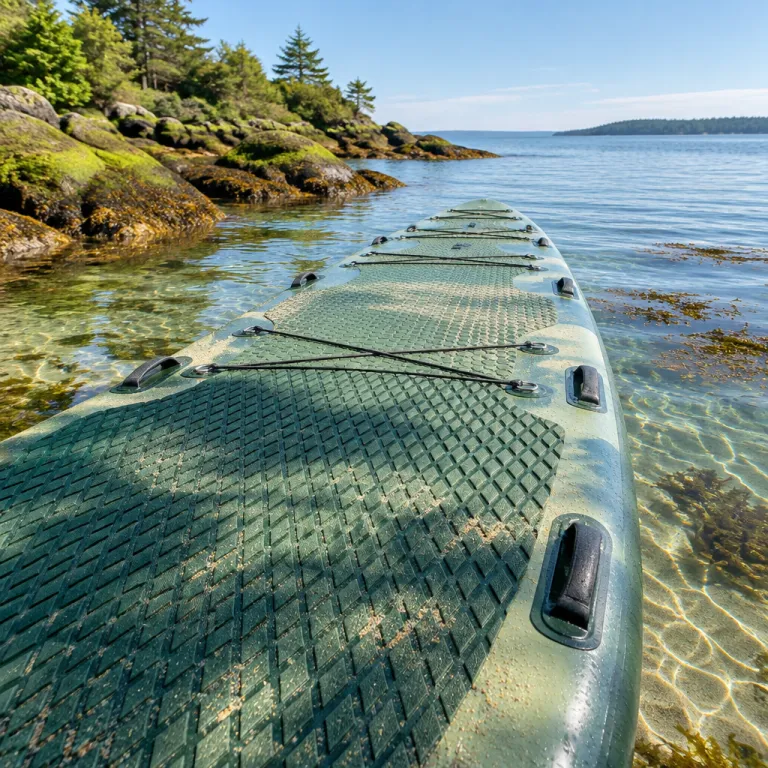
Why a shared giant SUP transforms island hopping days
Island hopping feels different when your group travels on a shared giant SUP instead of separate kayaks. A multi person stand up paddle board becomes a floating terrace where conversations, laughter, and quiet glides between coves all happen together. This shift from solo craft to one oversized platform changes how you experience distance, time, and the sea.
On a typical route between Greek islets or Croatian bays, a large inflatable stand up paddle board lets six to eight friends move as one, rather than scattering across the channel. The generous board length and width create a stable base, so even first time paddlers can contribute without fear of falling at every stroke. Because these giant SUPs are designed for group balance, the extra volume and wide outline handle chop that would unsettle a regular paddle board.
From a practical angle, one giant paddle craft simplifies logistics for island tours that include frequent swim stops and beach picnics. Guides can load dry bags, snorkeling items, and safety gear onto a single product instead of managing several smaller boards. As one guide in Croatia put it during a Pakleni Islands tour, “One big board means one big checklist, not six small ones,” which matters when you are timing crossings with ferry schedules, tidal currents, and daylight during a multi island itinerary.
Choosing the right giant SUP for your island route
Selecting the correct giant SUP for island hopping starts with matching board length and width to your group size and sea conditions. Shorter boards around 4.2 to 4.5 metres feel playful for sheltered lagoons, while longer boards closer to 5 metres track straighter on wind exposed channels. Width above 150 centimetres usually offers the extra stability needed when several people shift position at once.
Weight and inflatable construction also influence how easily you move between ferry decks, quays, and sandy beaches during a multi stop route. An inflatable paddle board that packs into a wheeled bag can roll through ports on Tenerife or La Gomera, which is invaluable if you follow a car free itinerary such as this Western Canaries island hopping route without a car. Look for a complete inflatable stand up paddle package that includes a robust hand pump, repair kit, and adjustable paddle for each rider.
Brands that specialise in water sports, such as Red Paddle Co, publish clear data on maximum weight capacity, recommended pressure, and unit price for each model. For example, the Red Paddle Co Ride XL (17’0” x 60” / 518 cm x 152 cm, up to 8 riders, 1.5 bar / 22 psi) and the Fanatic Fly Air XL (17’0” x 60” / 518 cm x 152 cm, 6–7 riders, 1.0 bar / 15 psi) both illustrate how manufacturers specify volume and load. These figures are taken directly from the 2023 product specification sheets for each brand. When you compare products, examine the deck pad texture, the number of carry handles, and the layout of tie down points for dry bags. These details matter more on long crossings, where comfort and secure storage turn a basic crossing into a relaxed floating lounge.
Planning island tours around a multi person board
Designing an island hopping itinerary around a multi person paddle board requires more than plotting pretty bays on a map. You need to align distance, expected wind, and group fitness with the capabilities of your chosen giant SUP. A realistic plan keeps daily crossings short enough that the experience remains playful rather than exhausting.
On routes such as Sal to São Vicente in Cape Verde, or shorter hops between sheltered coves, aim for segments of 3 to 6 kilometres per session. This distance allows for relaxed paddling, swim breaks, and photo stops without pushing the limits of the inflatable board or your team. For budget conscious travellers, pairing ferries with short SUP approaches, as outlined in this guide to Cape Verde island hopping on a shoestring, keeps both effort and costs under control.
When you book guided tours, ask how many paddle boards will be used and whether a dedicated giant SUP craft is available for families or groups. Operators who specialise in water sports often maintain both regular paddle boards and multi person boards, allowing them to adapt to changing sea states. Clear communication about expected pace, rest stops, and safety support boats ensures that every participant, from confident swimmers to cautious beginners, feels secure.
Understanding prices, value, and what is really included
For travellers comparing options, the price of a giant SUP experience depends on more than the visible board and paddles. Rental centres usually distinguish between a regular price for walk in customers and a sale price for early online bookings or multi day packages. When you evaluate offers, focus on the effective unit price per person per hour on the water.
Some operators list a headline sale price that appears attractive but excludes essential items such as wetsuits, dry bags, or guided support. Others present a higher regular price that already includes instruction, safety briefings, and rescue cover, which often represents better value for less experienced paddlers. For example, a half day giant SUP tour in Hvar might advertise €320 for up to eight people including guide and equipment, while a basic rental in Tenerife could be €180 for three hours without instruction. Always check whether the product description specifies the number of boards, maximum group size, and whether you will share a multi person stand up paddle craft with strangers.
If you are purchasing your own inflatable paddle board for extended island hopping, compare the regular price with any temporary sale price and look closely at what is bundled. A comprehensive package that includes a quality hand pump, leash, repair kit, and wide deck pad can reduce extra items you need to buy separately. Over several seasons, a durable inflatable stand up board with reliable valves and reinforced rails usually offsets a higher initial price through lower maintenance and replacement costs.
Logistics, shipping, and packing a giant SUP for island travel
Moving a giant SUP between islands demands careful attention to shipping, airline rules, and port logistics. Inflatable boards have a clear advantage over rigid boards because they roll into compact bags that fit on ferries, buses, and small island aircraft. Before placing any online orders, verify the stated board weight and packed dimensions against your airline’s checked baggage limits.
Many specialist retailers offer free shipping or discounted shipping on orders when you purchase multiple boards or accessories together. Read the delivery conditions closely, because some regions only qualify for free shipping above a certain cart total or for specific items. If you plan a long expedition, consider arranging delivery of a spare inflatable paddle board or repair kit to your first island, reducing what you must carry from home.
When packing, distribute heavy items such as pumps and repair tools across several bags rather than loading one oversized cart. Keep the board length and width specifications handy, as ferry staff sometimes ask for these details when allocating deck space. A simple checklist that covers paddles, leashes, deck pad cleaning gear, and safety equipment prevents last minute scrambles on the quay.
On water technique, safety, and group dynamics on a board giant
Once your group steps onto a giant SUP platform, technique and coordination become as important as the equipment itself. Position the heaviest paddlers near the centre to balance weight, then place confident paddlers at the front and rear to steer. This arrangement keeps the multi person paddle craft trimmed correctly and reduces drag during crossings.
Agree on a simple communication system before leaving the beach, using clear calls for starting, stopping, and changing sides with the paddle. On longer routes between islands, rotate paddlers every ten to fifteen minutes so that no one remains in the most demanding positions for too long. Regular micro breaks for stretching and hydration help maintain focus, especially when the sun reflects strongly off the water.
For safety, treat a multi person inflatable stand up board as you would a small boat, carrying a tow line, whistle, and basic first aid kit. In moderate swell, ask less confident paddlers to kneel on the deck pad while stronger paddlers remain standing, which lowers the centre of gravity. When conditions deteriorate beyond your comfort level, do not hesitate to return to shore and switch to a scheduled ferry or a local water taxi instead.
How giant SUPs change coastal culture and island economies
Shared giant SUP experiences are reshaping how visitors engage with small islands and their coastal communities. Instead of high speed motorised excursions, slow group paddling encourages longer stays in sheltered bays, where travellers linger for local lunches and cultural encounters. This shift supports small waterfront cafés, family run guesthouses, and independent guides who operate at a human scale.
In regions such as the Aeolian Islands, where narrow harbours and fragile shorelines limit large vessel access, low impact water sports offer a more sustainable alternative. A fleet of inflatable paddle boards and one or two giant SUPs can bring visitors to swimming spots without the noise and wake of bigger boats. On one early season trip, a local skipper on Salina summed it up neatly: “When people arrive by paddle, they stay longer, eat more, and leave less trace.” When paddlers pause for grilled fish or caper based dishes, as described in this feature on eating through the Aeolian Islands, their spending flows directly into local kitchens.
For island councils and marine parks, the relatively low weight and soft hulls of inflatable stand up boards reduce the risk of damage to traditional wooden boats and rocky shorelines. Clear zoning that separates motorised traffic from paddle boards improves safety while preserving the quiet character of coves and lagoons. As more travellers choose muscle powered craft over engines, the cumulative effect on noise levels, fuel use, and wildlife disturbance becomes significant.
Key figures shaping giant SUP and island hopping trends
- According to the Outdoor Industry Association’s 2023 Outdoor Participation Trends Report (Table 1, “Paddle Sports Participation”), participation in stand up paddleboarding in the United States grew by roughly 86 percent between 2013 and 2022, which has driven rapid innovation in multi person and giant SUP designs.
- Market research from Allied Market Research (Stand Up Paddleboard Market report, published 2022, reference code A16914) estimates that the global stand up paddleboard market could exceed 3 billion US dollars in value by 2031, with inflatable boards representing the fastest growing segment.
- Data from the European Environment Agency’s 2020 briefing on recreational boating and marine emissions (“Recreational boats – a growing source of emissions,” EEA Briefing 09/2020) indicate that small boats and personal watercraft account for a measurable share of local coastal air pollution, so shifting a portion of short island transfers to paddle powered craft can meaningfully reduce nearby emissions.
- Tourism boards in destinations such as the Canary Islands and Croatia report in their 2022 visitor statistics yearbooks that active holidays, including water sports like SUP, now represent a double digit percentage of total trips, reflecting a clear move toward experience based travel.
FAQ about giant SUPs for island hopping
How many people can safely ride a giant SUP on island tours ?
Most commercial giant SUP boards are rated for six to ten adults, depending on the exact board length, width, and maximum weight capacity. Always follow the manufacturer’s stated limit and consider sea conditions, because choppy water effectively reduces safe capacity. For mixed groups with children, count two children as one adult when estimating total load.
Is an inflatable giant SUP durable enough for rocky island coastlines ?
Quality inflatable stand up boards use multi layer PVC and reinforced rails that withstand regular contact with sand and occasional bumps against smooth rock. However, sharp volcanic rocks, barnacles, and metal edges can still puncture the skin, so landing technique and careful route choice remain essential. Carrying a basic repair kit and avoiding fully deflated dragging across rough ground will extend the board’s lifespan.
What safety gear is essential when paddling between islands ?
At minimum, every paddler should wear a suitable personal flotation device, and the group should carry a tow line, whistle, waterproof communication device, and basic first aid kit. In cooler waters, thermal protection such as wetsuits or neoprene tops reduces the risk of hypothermia during unexpected immersion. Always inform someone on shore about your planned route and expected return time before leaving.
Can beginners join a multi person giant SUP tour during an island holiday ?
Beginners can usually participate safely if the tour operates in sheltered waters, provides a qualified guide, and uses a wide, stable giant SUP platform. Many operators start with a short shoreline briefing that covers paddle technique, balance, and how to fall safely. For first timers, choosing morning departures with lighter winds and smaller chop improves comfort and confidence.
How should I compare prices for giant SUP rentals across islands ?
When comparing offers, look beyond the headline price and calculate the effective unit price per person per hour, including any extras such as wetsuits or dry bags. Check whether the listed regular price includes guiding, safety cover, and equipment, or whether these appear as separate items. Reading recent customer reviews helps confirm that the advertised product quality and service level match real on water experiences.