Choosing the right islands when you are travelling with children
Island hopping with kids tips start long before you board the first ferry. The most successful family holiday itineraries begin with a hard look at medical facilities, pharmacies, and supermarkets on each island, not just the prettiest beach photos. When you plan a trip for families with young kids, you quickly realise that the best Greek island for children is often the one where a reliable pediatrician is a short taxi ride away.
For a first island hop in Greece with children, prioritise the larger Greek islands such as Naxos, Paros, Crete, and Rhodes. These islands in the Cyclades and beyond usually have hospitals or well equipped clinics, several pharmacies, and supermarkets that stock familiar brands for kids with allergies. Smaller Aegean islands can be magical for a day trip with family, but they are better as add ons once you understand how your children handle ferry travel and new environments.
Families planning to island hop across the Greek islands often ask whether to include Santorini and Mykonos on the same route. Both islands are iconic, but they are not equally family friendly for young kids, especially in peak holiday periods. Santorini offers extraordinary views yet limited sandy beach options for children, while Mykonos has more beaches but can feel intense for a quiet family holiday with kids who need early bedtimes.
When you design a trip for families with kids, think in clusters rather than in long chains of islands. In Greece, that might mean pairing a larger island such as Naxos with a smaller neighbour like Koufonisia for a short island hop, or combining Crete with Santorini for a balanced mix of services and drama. Outside Greece, the same logic applies to archipelagos from the Croatian coast to the Caribbean, where families with young children will love routes that keep transfer times short and services predictable.
Safety should sit at the centre of every family island hopping plan. Use reputable transport operators, check that ferries carry enough life jackets for adults and children, and avoid last minute bookings with unknown private boats when travelling with young kids. When you compare islands, look not only at beaches and hotels but also at how quickly you can reach a clinic on a bad day with a feverish child.
Why the three night rule matters for families with young kids
Couples can treat island hopping as a game of collecting islands, but families with children need a slower rhythm. Moving every one or two days turns packing, unpacking, and navigating ferry terminals into a full time job for parents, especially when travelling with young kids who still nap. A simple three night minimum per island transforms the same trip into a calmer family holiday where everyone has time to settle.
Think of the first day on any new island as logistics day. You arrive by ferry with kids, find your accommodation, locate the nearest supermarket, and work out the safest walking route to the beach with children in tow. Only on the second day do families really start to relax into the island, and by the third day young kids will love the familiarity of the same café, the same stretch of sand, and the same friendly faces.
For most families, a realistic island hopping plan might include two or three islands over ten to fourteen days. In Greece with children, that could mean Athens to Naxos, then on to Paros, and finally back to the mainland, with three or four nights on each stop. This pattern gives you enough time on each Greek island to explore, schedule a day trip by boat, and still keep afternoons free for naps or quiet play.
There is also a safety argument for longer stays when you travel with family. If a ferry is delayed by around thirty minutes, as reported in several recent Hellenic coastal shipping punctuality summaries, or even cancelled, you have buffer time built into your holiday rather than a domino effect of missed connections. For a deeper look at how your policy responds when a crossing fails, read this guide on what your travel insurance actually covers when a ferry gets cancelled mid hop.
Parents often underestimate how much transition drains children on a multi island trip. Even confident young kids can become anxious when beds, bathrooms, and breakfast routines change every night, and that stress shows up as meltdowns on the beach or resistance to leaving the room. A three night rule respects the emotional bandwidth of children and gives families the mental space to handle the inevitable small disruptions that come with island hopping.
Ferry logistics with kids: cabins, timing, and the day bag that saves the day
The ferry is where island hopping with kids tips move from theory to practice. On paper, a two hour crossing between Greek islands looks simple, but with young children that same journey can feel twice as long. The right combination of cabin choices, sailing times, and a well packed day bag can turn a stressful transfer into a highlight of the trip for kids.
For longer routes in Greece with children, especially overnight or four hour crossings, booking a cabin is rarely a luxury. A private space lets families with kids stretch out, manage naps, and change clothes without juggling bags in crowded seating areas, and it gives parents a quiet corner if a child feels unwell. On shorter hops between Cyclades islands, reserved airline style seats inside the ferry often work well, while some families with older children will love spending time on deck watching the wake between each island.
Timing matters as much as the vessel when you travel with family. Whenever possible, choose morning sailings, because seas are usually calmer and children are fresher, which helps with motion sickness and patience levels during boarding. As one expert answer in recent travel guidance puts it, "Use motion sickness bands or medication; choose morning travel for calmer seas." Typical family friendly routes include Piraeus to Naxos (around four to five hours on a conventional ferry with operators such as Blue Star Ferries) or Heraklion to Santorini (roughly two hours on a high speed vessel run by companies like SeaJets), so plan meals and naps around those windows.
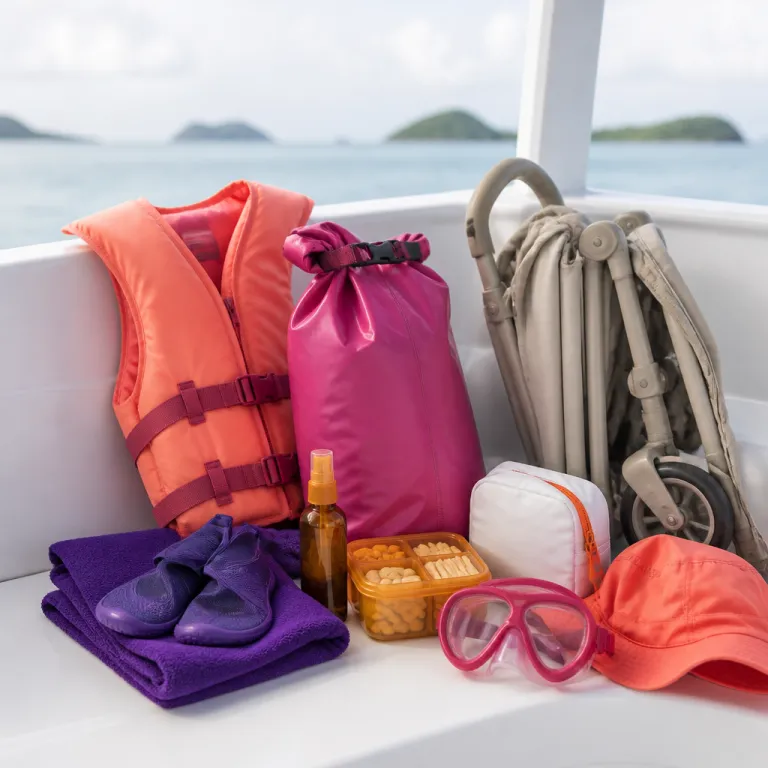
Your ferry day bag is the unsung hero of any island hop with kids. Pack snacks that do not melt, refillable water bottles, a small first aid kit, motion sickness remedies, and simple entertainment such as sticker books or downloaded shows on a tablet, and keep passports and tickets in a waterproof pouch. Many families also carry a lightweight change of clothes for each child, because a spilled juice or a sudden wave on deck can turn a comfortable day trip into a cold, sticky ordeal. A one page checklist taped inside your suitcase lid makes it easier to repack the same core items before every sailing.
On popular routes such as Piraeus to the Cyclades or Heraklion to Santorini, ferries can run late, and surveys by family travel organisations suggest that around a quarter of families experience some form of travel disruption during a multi island trip; this figure appears consistently in recent family travel polls and industry briefings. Learning to read local timetables and understanding which routes are more resilient is a skill in itself, and this detailed guide to booking Cyclades ferries like a local is an excellent starting point. When you combine that knowledge with a disciplined day bag routine, you give your children the best chance of stepping off each ferry ready to enjoy the next beach rather than just needing a nap.
Short hop archipelagos versus long haul routes for a first family island trip
Not every island chain suits a first attempt at island hopping with children. For many families, the most forgiving option is a compact archipelago where islands sit an hour or two apart by ferry, and services feel consistent from one port to the next. The Cyclades in Greece, parts of the Croatian coast, and some Caribbean groups all offer this short hop structure that works beautifully with kids.
In Greece with young children, a classic family friendly loop might include Paros, Naxos, and a smaller neighbour such as Antiparos, all linked by frequent ferries and calm waters most of the season. Parents can plan a mix of beach days, gentle cultural visits, and short boat excursions, knowing that if a child falls ill, a larger Greek island with better medical facilities is close at hand. This pattern of one bigger base island plus one or two smaller islands keeps logistics manageable while still giving children the thrill of multiple ferry rides.
Long haul island hopping, such as combining several Caribbean islands or exploring the Philippines, introduces different challenges for families with kids. Flight connections replace short ferries, time zones shift, and the cost of each transfer rises, which raises the stakes when delays occur and makes it harder to maintain routines for young kids. These routes can be rewarding for experienced travellers with older children, but they are rarely the ideal first experiment in travelling with family across multiple islands.
When you weigh short hop versus long haul options, consider not only distance but also the density of services. A route that links several Greek islands with daily ferries and multiple accommodation choices gives parents more flexibility than a chain where one cancelled flight strands families for days. For a first family holiday focused on island hopping, it is usually wiser to choose an archipelago where you can adjust plans by a day without losing the entire trip.
There is also the question of how many border crossings you want to manage with children. Staying within one country, such as Greece with its extensive network of islands, simplifies paperwork, health insurance, and emergency care, which matters when you travel with young kids who may need a doctor at short notice. Once you have tested your family’s tolerance for ferries, packing, and new beds in a familiar framework, you can start to think about more complex multi country island hop itineraries.
Where to sleep: apartments with kitchens versus hotels for families
Accommodation strategy can make or break island hopping with kids tips in real life. Parents often focus on pools and proximity to the beach, but for families with children the presence of a small kitchen and a washing machine can matter more than a dramatic infinity edge. Choosing the right mix of apartments and hotels on each island shapes how relaxed your days will feel.
Self catering apartments or serviced residences suit many families with young kids, especially on longer stays in places like Crete or Naxos. A simple kitchen lets you prepare early breakfasts for children who wake before cafés open, store snacks for the ferry, and cook plain meals on nights when kids are too tired for restaurants, which saves both money and stress. Parents travelling with babies or toddlers will love having a fridge for milk, a sink for rinsing bottles, and enough space for a travel cot without feeling cramped.
Hotels still have a role in a well balanced family holiday, particularly on shorter stops or in more urban ports where apartments are scarce. A property with interconnecting rooms or family suites, a reliable breakfast service, and a shaded pool can be a welcome reset after several days of self catering, especially when you arrive late by ferry with kids who need an immediate meal. When you book, look for clear information about cots, extra beds, and child policies, because not every stylish property is truly family friendly in practice.
On islands such as Santorini and Mykonos, where space is tight and prices run high, families often choose to stay in apartments slightly away from the most photographed villages. This trade off buys more room for children to move, quieter nights for light sleepers, and easier parking if you rent a car for beach days. In contrast, on larger Greek islands like Crete, you can often find family friendly resorts with kids clubs and shallow pools that give parents a few quiet hours while children play safely.
Whichever style you choose, keep safety at the forefront. Check balcony railings, pool depths, and proximity to busy roads when you arrive, and do a quick childproofing sweep of each new room before kids start exploring. Over a multi island trip, this simple routine becomes second nature and allows families to relax into each new space more quickly.
Budgeting for a multi island family holiday: what a realistic day costs
Island hopping with children carries a different cost profile from a couple’s minimalist backpacking trip. Families pay for extra ferry tickets, larger rooms, and more frequent snacks, and those small additions accumulate quickly across several islands. A clear daily budget framework helps parents decide how many islands to include and where to allocate comfort.
Start by separating fixed transport costs from flexible daily spending. Ferries between Greek islands can vary widely in price depending on speed, route, and season, and cabins or reserved seats add another layer when you travel with kids, so price out the full island hop before you commit to the itinerary. Once you know the total for ferries and any flights, you can divide that across the number of days to understand the true cost of choosing four islands instead of two. For example, a summer high speed ferry between Paros and Naxos might cost a family of four around €80–€120 in total, while a longer cabin crossing between Crete and the Cyclades can feel closer to €200–€250, which is roughly the price of a simple hotel night on a mid range island.
On the ground, a family of four in Greece with children might plan for accommodation, food, local transport, and activities as separate budget lines. Apartments with kitchens often reduce restaurant spending, because families can handle breakfasts and some dinners at home, while still enjoying lunches at beach tavernas that kids will remember. As a rough guide, many families report spending €120–€200 per day on a mid range island for accommodation and meals, with simple pleasures such as pedalos, small boat excursions, or a guided day trip to a nearby island added on top and balanced against the cumulative cost of multiple ferry crossings.
Do not forget to budget for health and safety. Travel insurance that covers ferry delays, medical care on remote islands, and emergency evacuation is essential when island hopping with family, and its cost should be treated as non negotiable rather than an optional extra. Given that travel surveys by family travel associations suggest around twenty five percent of families experience some form of disruption on multi stop trips, this is not a theoretical risk but a practical line item.
Finally, build a small contingency fund for the unexpected. A last minute taxi when a bus fails to appear, a replacement for a lost child’s sandal on a tiny island, or an extra night’s stay when a storm cancels ferries can all strain a tight budget. When you accept that some of these costs are part of the rhythm of island hopping, you can make calmer decisions in the moment and focus on the memories your children will carry home.
Key figures for safer and smoother family island hopping
- Average ferry delay times on popular island routes often sit around thirty minutes, according to multiple Greek coastal shipping authority reports and operator punctuality summaries, so families should always build buffer time into connections.
- Travel surveys and family travel industry briefings indicate that roughly twenty five percent of families experience some form of disruption during multi island trips, which reinforces the need for flexible itineraries and robust travel insurance.
- Many parents find that limiting a family island hopping itinerary to two or three islands over ten to fourteen days significantly reduces stress compared with visiting four or more islands in the same period.
- On busy routes between major Greek islands, booking ferry tickets at least several days in advance is recommended for families travelling in peak season, especially when they need reserved seats or cabins.
- For most families with young children, a realistic daily budget on mid range Greek islands often allocates a larger share to accommodation and food than to paid activities, because simple beach days remain the core attraction.
FAQ about island hopping with children
How can parents manage children’s motion sickness during island hopping ?
Parents can reduce motion sickness by choosing morning ferries when seas are usually calmer, seating children in the middle of the vessel where movement feels gentler, and encouraging them to look at the horizon rather than screens. Medical professionals often recommend age appropriate motion sickness medication or acupressure bands, used according to instructions. Keeping snacks light before travel and having water and simple crackers on hand also helps many children.
What are the essential items to pack for kids on ferry days ?
For each ferry day, pack a small backpack with snacks that do not melt, refillable water bottles, and at least one change of clothes per child in case of spills or splashes. Add a compact first aid kit, motion sickness remedies, and simple entertainment such as colouring books, small toys, or downloaded shows with headphones. Keep passports, tickets, and any necessary medication in a waterproof pouch that stays with an adult at all times, and use a repeatable checklist so nothing vital is left behind on early departures.
How can families ensure safety during island transfers ?
Safety starts with booking reputable ferry companies or licensed private boats and avoiding last minute cash deals with unverified operators. At the port, parents should keep children close, hold hands in crowded boarding areas, and point out life jackets and emergency exits once on board. Whenever possible, families should board early to secure safe seating and avoid standing near vehicle ramps or open railings during manoeuvres.
How light should families pack for a multi island trip with children ?
For island hopping, each adult ideally manages one medium suitcase and one small day bag, while children share a single additional bag for toys and beach gear. Packing light makes it easier to navigate ferry ramps, narrow island streets, and small hotel staircases without lifts. Choosing quick drying clothes, limiting shoes, and planning to do laundry once or twice per trip usually keeps luggage manageable.
How far in advance should families plan routes and book ferries ?
Families should sketch their route and book key ferries several weeks in advance for peak season travel, especially on popular Greek island routes where cabins and reserved seats sell out. Early planning allows parents to choose child friendly sailing times and build in rest days between longer crossings. Outside the busiest months, some flexibility is possible, but it remains wise to secure at least the first and last major ferry legs before departure.