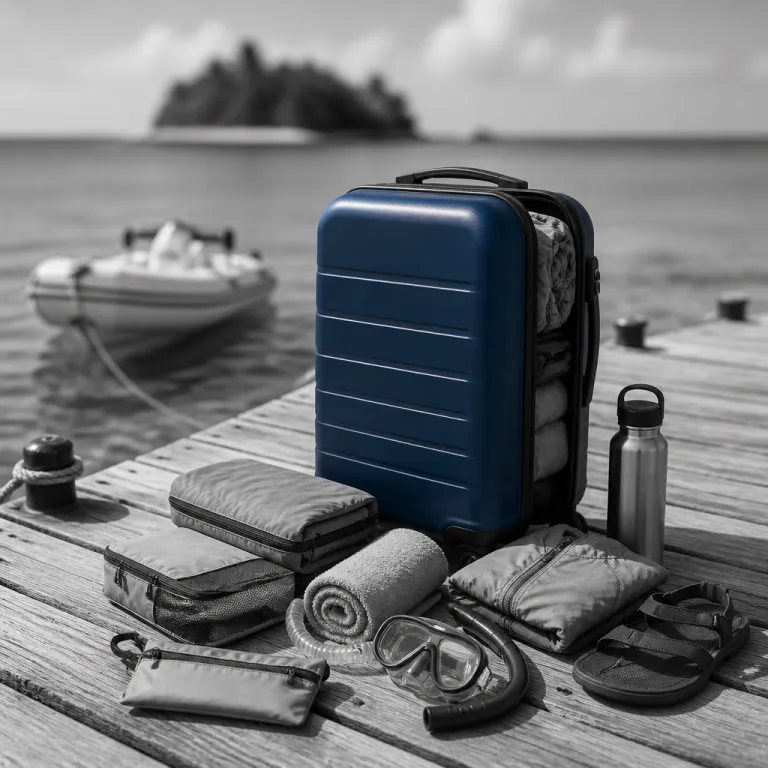
Why a carry on only strategy wins every island hop
Island hopping rewards travelers who move lightly and think like ferry crews. When you commit to a streamlined island-hopping packing list built around cabin baggage only, you step off each boat ready to walk straight to the guesthouse while others queue for porters and chase missing bags. On routes where speedboats, small prop planes, and crowded ferries define the trip, a compact carry-on suitcase and one personal item are not a minimalist flex but a practical necessity.
Most regional airlines that serve archipelagos cap cabin luggage at about 7 kg. For example, as of March 2024, Cebu Pacific, AirAsia, and Scoot all publish 7 kg limits for standard economy carry-on allowances on many short-haul routes, and numerous Southeast Asian speedboats quietly charge extra for any large checked bag that slows boarding. That reality shapes how you pack, what you carry, and which things you keep within arm’s reach during each long day of transfers between islands. When your entire travel checklist fits into one small backpack or cabin-size roller plus a slim under-seat tote, you move at the same tempo as the crew, not the cargo.
Ferries in Greece, Croatia, the Philippines, and French Polynesia rarely offer structured luggage storage systems, so your bag lives beside you on deck or in a corner. A single well-edited carry-on suitcase or soft-sided backpack is easier to lift over rails, keep dry, and slide under benches than any heavy suitcase that was designed for airport carousels only. After years of reporting on island routes, I have seen families miss connections because their checked items were still on the pier while the captain was already untying the ropes.
There is also the quiet luxury of knowing that every piece you pack will earn its place on the trip. A focused island-hopping capsule wardrobe that stays within cabin baggage limits forces you to choose clothes and shoes that work across beach days, village walks, and smarter dinners, instead of hauling long lists of just-in-case items that never leave the bag. The result is less time repacking and more time watching the next island appear through the salt spray from the ferry deck.
For premium families, the carry-on-only mindset is not about deprivation but about control and comfort. Children move more freely when they are not tethered to rolling luggage on broken piers, and parents can keep essential things like snacks, a light rain jacket, and a reusable water bottle exactly where they need them. Once you have experienced a week-long trip through the Cyclades or the Visayas with only one shared packing plan and two well-chosen bags, it becomes difficult to justify any other way to travel.
Choosing the right carry bag and personal item for island routes
The foundation of any carry-on-only island-hopping setup is your main bag. For most routes, a 35 to 40 litre soft-shell cabin suitcase or structured backpack hits the sweet spot between airline limits and real-world ferry practicality. A lightweight, water-resistant backpack is ideal when you expect wet landings from long-tail boats or speedboats that nose directly onto the sand.
Experts who specialise in minimalist travel packing consistently recommend soft luggage for archipelagos, because it flexes into overhead bins on small planes and tucks neatly under benches on ferries. When asked what is the best type of bag for island hopping, one trusted guide answers clearly: "A lightweight, water-resistant backpack is ideal." That advice holds whether your trip runs through the Cyclades, the Andaman Sea, or the San Blas islands, because the constraints of salt, spray, and tight gangways are remarkably similar.
Your second piece should be a disciplined personal item that fits under the seat and never leaves your side. Think of this small bag as the mobile command centre for the day, holding passports, phones, a compact toiletry kit, medication, and the tech items you cannot afford to lose. When you pack daily essentials this way, you can surrender the main backpack to a luggage stack on deck without worrying about valuables or fragile things buried under other suitcases.
Organisation tools matter more at sea than in a city hotel, because you often repack on the move. Use packing cubes to separate swimwear, long-sleeve layers, and evening clothes so that you can reach exactly what you need during a quick change between a wet crossing and a harbour-side dinner. A slim dry bag or waterproof pouch inside your carry-on travel setup protects electronics and documents when the spray comes sideways across the open deck.
For families, I recommend one shared cabin-size suitcase for bulk clothes and shoes, plus one personal backpack per adult to keep day items accessible. Children can carry only a very small backpack with a change of clothes and a few carefully chosen things for the ferry, which keeps their sense of independence without overloading them. For deeper gear breakdowns and route-tested packing tips, the detailed guide on expert packing essentials and travel tips for seamless island adventures is a useful companion.
The island hopping wardrobe: fabrics, layers, and the right pairs of shoes
Clothing is where most carry-on-only island-hopping plans either succeed elegantly or collapse under the weight of too many options. The goal is to pack clothes that handle heat, humidity, and the occasional cold-weather squall without demanding a checked bag full of backups. Think in terms of outfits that work across long ferry days, beach afternoons, and smarter dinners in harbour towns, rather than separate wardrobes for each activity.
Start with fabrics that are quick drying and moisture wicking, because laundry often happens in a sink or under a cold shower after a sandy day. Merino wool is a quiet hero here, offering odour resistance and temperature regulation in both tropical evenings and breezier Mediterranean crossings, so one long-sleeve merino top can replace several cotton layers. When you combine merino wool pieces with lightweight synthetics, you can comfortably stretch a week-long wardrobe across many years of island routes without feeling underdressed.
Limit yourself to two or at most three pairs of shoes, because footwear is heavy and bulky in any bag. As one expert answer in the dataset puts it without hesitation: "How many pairs of shoes should I pack?" followed by "Limit to two: one for walking, one for water activities." For most families, that means a supportive pair of trainers or sandals for long days on cobblestones and trails, plus amphibious sandals or reef shoes that handle wet decks, rocky entries, and slippery piers.
Build your packing list around a tight palette of neutral colours that mix easily, then add one or two brighter pieces for photos and dinners. A couple of long-sleeve shirts in breathable fabric protect against sun and evening breezes, while a compact rain jacket earns its place on any route where squalls can blow through without warning. Packing cubes help you keep this capsule wardrobe under control, separating clean and worn items so that your carry bag never becomes a chaotic suitcase of crumpled things.
For premium family travelers, the same principles apply to children’s wardrobes, just with more emphasis on quick-drying shorts and rash guards that can be rinsed and reused. Aim for enough clothes to last four or five days, then plan a simple hand-wash routine rather than packing for the entire trip duration. If you want a concrete template to adapt, the structured advice in the guide on the ultimate island hopping packing list for a Caribbean vacation translates well to Mediterranean and Pacific routes with only minor tweaks.
Toiletries, reef safe sunscreen, and tech that survives salt and spray
Toiletries and technology are where many otherwise disciplined carry-on-only island-hopping plans quietly gain weight. The key is to decant, downsize, and respect local regulations, especially around reef-safe sunscreen in destinations such as Hawaii, Palau, and the US Virgin Islands. Several island nations now restrict or ban certain chemical filters, so arriving with compliant products in a compact toiletry bag saves both hassle and coral reefs.
For a typical week trip, you can carry all essential liquids in travel-size containers that fit easily into one transparent pouch. Focus on multi-use items such as a combined shampoo and body wash, a solid moisturiser bar, and a mineral-based sunscreen that works for both adults and children, which keeps your packing lean and your carry-only strategy within airline limits. A small first-aid kit with plasters, antiseptic wipes, and motion sickness tablets deserves permanent space in the bag, because island pharmacies can be sparse or closed on Sundays.
On the tech side, salt and humidity are relentless, so protection matters more than quantity. A waterproof phone case, a universal adapter that handles both European and Asian sockets, and a reliable portable charger form the core of any serious carry-on travel kit for island routes. Use a dry bag or waterproof pouch to keep these items safe during wet landings, and remember that "Use waterproof pouches for electronics." is not just a guideline but a lived lesson from countless soaked backpacks.
Families often over-pack entertainment devices for children, only to find that the real show happens on deck as flying fish and new islands appear. One shared tablet loaded with offline maps, ferry schedules, and a few films is usually enough, especially when you keep charging cables and adapters together in a small organiser within the personal item. This disciplined approach to tech packing tips the balance back toward experiences rather than screens, while still respecting the realities of long crossings and occasional delays.
Finally, think about water and weather as daily variables rather than background conditions. A reusable water bottle for each traveler reduces plastic waste and keeps everyone hydrated on ferries where drinks are either expensive or unavailable, while a packable rain jacket lives at the top of the bag for sudden squalls. When you align your packing list with the environmental policies of island destinations, such as those discussed in analyses of Hawaii’s climate-related levies on cruise passengers at this climate tax template for island destinations, your carry-on-only strategy becomes part of a more responsible way to move between fragile shores.
Packing tips for families: how to share one island hopping packing list
Premium families often assume that traveling with children makes a hand-luggage-only island itinerary unrealistic, yet the opposite is usually true. Children tire quickly when asked to drag a suitcase down a hot pier, and parents end up carrying both bags and kids when the swell picks up. A shared family packing list, anchored by one main carry-on suitcase and a couple of well-organised backpacks, keeps hands free and tempers cooler.
Start by treating the family as one packing unit rather than three or four separate travelers with individual bags. Pool similar items such as swimwear, long-sleeve rash guards, and sleepwear into shared packing cubes, then assign each cube to a parent’s backpack or the main carry bag so that access is simple during a long day of transfers. This approach reduces duplication, because you see clearly when you already have enough T-shirts, shorts, or spare shoes for the whole group.
Daily rhythm matters as much as the raw list of items. Keep a dedicated day cube near the top of the bag with everything needed for the next 24 hours, including clothes, underwear, and one set of nightwear for each child, so that you never have to unpack the entire suitcase in a small room after a late ferry. A separate wet-gear cube or dry bag handles swimsuits and quick-drying towels after impromptu swims, which prevents moisture wicking through the rest of the clothes.
Agree on limits before you start to pack, especially around toys and personal things. Each child can choose a small selection that fits into a single pouch, while adults commit to only two pairs of shoes each and a strict cap on just-in-case items that rarely leave the bag. Over years of observing families on island routes, the ones who thrive are those who treat packing as a shared strategy rather than a last-minute scramble.
Remember that island hopping is a sequence of short moves rather than one long-haul flight, so you will repack often. Build a simple routine where everyone returns their things to the same cube or pocket after each day, and keep passports, tickets, and ferry confirmations in one waterproof organiser that always lives in the same section of a personal item. When the captain calls boarding and the queue surges forward, you will be grateful that your entire world fits into a calm, well-ordered carry-on-only system.
What not to pack: the things that never earn their place
The most effective island-hopping packing list is defined as much by what you leave behind as by what you carry. Certain items feel essential when you stand in your bedroom at home, yet they rarely leave the suitcase once you start moving between islands. Learning to recognise these patterns is the difference between a nimble bag and a burden that slows every transfer.
Heavy hard-shell luggage is the first category to skip, because it is designed for airport carousels rather than wet piers and narrow gangways. A rigid suitcase is harder to keep dry, more awkward to lift into small boats, and unforgiving when overhead bins on regional aircraft are slightly smaller than advertised, which can force an unexpected checked bag at the gate. Soft-sided carry bags and backpacks flex into tight spaces and absorb the knocks of ferry life with far less drama.
Multiple outfits for hypothetical scenarios also tend to remain untouched. Formal clothes for rare fine-dining evenings, extra long-sleeve shirts for imagined cold weather that never arrives, and third or fourth pairs of shoes for specific outfits usually end up as dead weight in the packing list. Instead, choose one smart yet relaxed outfit that can handle any dinner from Paros to Palawan, and let your quick-drying core wardrobe do the rest of the work.
Bulky beach towels, full-size toiletries, and duplicate tech items are other frequent culprits. A compact microfiber towel dries faster and packs smaller than a hotel-style version, while a single universal adapter and one shared portable charger are enough for most family setups, especially when you keep cables organised in a small pouch. As one of the dataset recommendations puts it succinctly: "Pack a microfiber towel." because it earns its place on every island trip.
Finally, resist the urge to pack for every year of potential use rather than the specific week trip in front of you. Island shops can supply forgotten basics, and many guesthouses offer laundry services or at least a washing line, so you do not need to carry long lists of backup items just in case. When you edit ruthlessly and trust your carry-on-only system, you gain the freedom to step off each boat with nothing more than a well-balanced bag and the energy to enjoy the next island.
Key figures for carry on only island hopping
- Most regional airlines that serve island chains set an average carry-on luggage weight limit of about 7 kg per passenger, which means every extra pair of shoes or heavy toiletry bag directly eats into your clothing allowance (source: typical airline regulations for short-haul routes, such as Cebu Pacific, AirAsia, and Scoot published cabin baggage policies, accessed March 2024).
- Checked baggage fees on many international and regional flights can reach around 150 USD per segment for standard economy passengers, so a multi-island itinerary with four flights can quietly add more than 600 USD in luggage costs alone if you rely on a checked suitcase (source: published airline baggage fee tables for economy cabins on major carriers including United, Delta, and British Airways, reviewed in early 2024).
- On busy ferry routes in Southeast Asia and the Mediterranean, boarding and disembarkation windows often last less than 10 minutes, which makes a single carry-on bag far easier to manage safely on crowded gangways than multiple suitcases per family (source: operator schedules and port handling observations from 2019–2023).
- Minimalist travel packing studies consistently show that using packing cubes and a structured list can reduce total packed volume by 20 to 30 percent, which is often the difference between a compliant cabin suitcase and an overweight bag that must be checked (source: comparative gear tests by independent travel gear reviewers published between 2020 and 2023).
FAQ about carry on only packing for island hopping
What is the best type of bag for island hopping with kids?
For families, a soft-sided 35 to 40 litre backpack or carry-on suitcase for shared clothes, plus one small backpack per adult, works best on ferries and small boats. This setup keeps hands free for children while still fitting within typical 7 kg cabin limits. Avoid hard-shell suitcases, which are awkward on narrow gangways and more likely to be forced into the hold.
How many pairs of shoes should I bring for an island hopping trip?
Two pairs of shoes are usually enough for a carry-on-only island itinerary, even for a week trip. Choose one comfortable pair for walking and travel days, plus one water-friendly pair for beaches, boats, and rocky entries. A third pair only makes sense if you have a specific activity such as technical hiking that truly requires it.
Is a dry bag really necessary if my backpack is water resistant?
A dry bag or waterproof pouch is strongly recommended, even with a water-resistant backpack. Wet landings, sideways spray, and sudden rain can soak outer fabrics, and a dedicated dry compartment protects passports, phones, and chargers. Many travelers use a small dry bag inside their main carry bag to isolate electronics and documents from damp clothes.
What clothing fabrics work best for multi island itineraries?
Quick-drying, moisture-wicking fabrics such as lightweight synthetics and merino wool perform best across changing island conditions. They handle heat, humidity, and occasional cool evenings without needing frequent washing, which supports a compact packing list. Avoid heavy cotton pieces that stay damp and take up more space in the bag.
Should I bring my own snorkel gear or rent it on each island?
Bringing your own mask and snorkel can improve fit and hygiene, especially for children with smaller faces. However, fins are bulky, so many carry-on-only travelers choose to rent those locally while packing just masks and snorkels. If you do pack gear, use a mesh bag and place it near the top of the suitcase for easy access on boat days.