The four island rhythm: why this Balearic route matters
Mallorca, Menorca, Ibiza and Formentera form a compact chain of Balearic islands that rewards patient, sea-based travel. Instead of chasing the loudest beach party, you move by ferry and water taxi, letting each island reveal its own tempo across the Mediterranean Sea. This is Ibiza–Formentera island hopping as part of a wider Balearic arc, not an isolated trip.
Start in Palma de Mallorca, where recent limits on party boats and tighter rules on new youth hostels are quietly reshaping the island into a more measured destination. That shift makes Mallorca an ideal first island for a couple planning a slow travel itinerary, with time for a refined restaurant lunch in the old town before an evening ferry to Menorca. The crossing sets the tone; you watch the coastline fall away and understand that this trip is about the water as much as the beaches.
Menorca’s lower profile compared with Ibiza keeps ferry decks calm and conversations hushed. As a UNESCO Biosphere Reserve, the island protects its coves, wetlands and rural interior, so your travel guide should leave space for unplanned walks rather than a checklist of beaches. From here, the Ibiza–Formentera leg becomes the natural next step, a pivot from quiet Menorcan harbours to the layered energy of Ibiza Town and the clear waters beyond.
Ibiza to Formentera by water taxi: the 20 minute reset
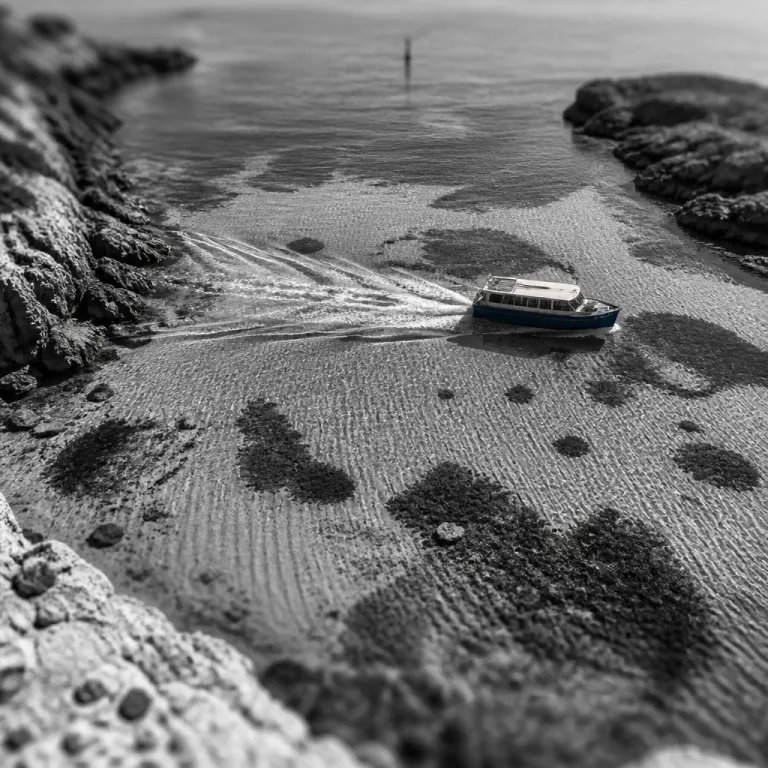
Arriving in Ibiza, many visitors see only the main ferry terminal and the road to their hotel, then never look back toward the sea. The real luxury for island-hopping couples lies offshore, on the slim route between the island of Ibiza and the island of Formentera, where private water taxis replace fixed ferry timetables. Here, Ibiza–Formentera island hopping becomes tactile; you feel the spray, smell the salt and watch Formentera grow from a line to a landscape.
Several operators now treat this short crossing as a tailored experience rather than simple transport. Enjoy Ibiza Charter, Hotfish Water Taxi and IbizaCentralCharter, for example, run high-speed RIBs with experienced skippers, turning the 20 minute ride into a flexible mini trip with swim stops near Ses Salines or the protected waters off southern Ibiza. Typical private transfers start around 450–550 € for a small group of up to five passengers in high season, with clear quotes available directly from each operator and supplements for extra guests or custom routes.
For couples used to Caribbean sailing journeys, this feels familiar yet distinct, and resources like this refined Caribbean island hopping inspiration can help you compare rhythms. Expect a minimum cost around 500 € for five passengers, with supplements for extra guests and a modest surcharge at night, which is still reasonable for a private deck and direct access to Port de la Savina on Formentera. Book ahead for evening crossings, especially if you plan a late restaurant reservation in Es Pujols or a quiet walk under the lighthouse at Cap de Barbaria.
Formentera: the day trip that deserves three nights
Most travel brochures sell Formentera as a simple day trip from Ibiza, a quick ferry ride to a photogenic beach and back. That does a disservice to an island whose clear waters, dunes and low stone walls reward unhurried slow travel over several days. When you treat Ibiza–Formentera island hopping as a multi-night stay, the island of Formentera reveals a depth that rivals far larger islands.
Port de la Savina is your first contact point, a compact harbour where fishing boats share space with water taxis and ferries from Ibiza. From here, a short drive leads to Sant Francesc Xavier, the island’s understated capital, where whitewashed façades and a central square set a relaxed tone for the rest of your trip to Formentera. Staying near Sant Francesc or Es Pujols keeps you close to both restaurants and the main roads that fan out toward every beach and cala.
Platja de Migjorn stretches for kilometres along the south coast, a long curve of sand and rock shelves where you can still find quiet pockets even on a busy day. On the western side, Cala Saona offers one of the most beautiful sunset views in the Balearic Islands, with cliffs catching the last light while yachts anchor in the bay. For a different perspective, drive to Cap de Barbaria or climb toward Pilar de la Mola, where the plateau and lighthouse give a sense of how small yet complete this island feels, similar in spirit to compact hubs like those explored in this lakeside island hopping base guide.
Routes, beaches and the quiet corners between Ibiza and Formentera
Planning Ibiza–Formentera island hopping is less about counting beaches and more about sequencing them. The classic route runs from Ibiza Town or Marina Botafoch to Port de la Savina, then onward by scooter or bicycle to Platja de Migjorn, Cala Saona and the northern sands near the natural park of Ses Salines. Each beach and cala has its own character, so your travel guide should frame them as moods rather than mere stops.
On Ibiza, the sweep of Ses Salines beach acts as a prelude to Formentera, with salt flats and shallow clear waters that mirror what awaits across the channel. Couples can spend a late morning here, then board a mid-afternoon ferry or water taxi, arriving in Formentera with enough time for a first swim at Platja de Migjorn before dinner. Standard fast ferries on this route usually take around 30–40 minutes and run frequently in summer, with return tickets often starting near 50–70 € per person depending on season, timetable and operator.
Once based on Formentera, alternate long beach days with inland wanders to Sant Francesc Xavier and Pilar de la Mola, where cafés and small shops break up the sun and salt. Es Pujols, often dismissed as too busy, can work well as a base if you choose a quiet street and use it mainly for restaurant options and evening walks. For couples who enjoy hiking between viewpoints and coves, the broader philosophy matches other curated island hopping hiking itineraries that prioritise paths and headlands over crowded sands.
Staying, eating and budgeting for a refined Balearic hop
Choosing where to sleep shapes the entire feel of Ibiza–Formentera island hopping, especially for couples seeking quiet rather than crowds. On Ibiza, look for a hotel near the old town or Marina Botafoch, where you can walk to the ferry while still slipping back to a calm room after dinner. On Formentera, hotel options cluster around Es Pujols, Sant Francesc and Platja de Migjorn, each area offering a different balance of beach access and evening atmosphere.
Es Pujols suits travellers who like to stroll between restaurant terraces at night, then retreat to the sand early in the morning before the day trippers arrive. Sant Francesc Xavier works better for those who prefer a village feel, with cafés, bakeries and small shops that make it easy to embrace slow travel rhythms between beach outings. Along Platja de Migjorn and near Cala Saona, you find some of the best Formentera stays for couples who want to wake up almost on the shore, then drive or cycle out to other beaches during the cooler parts of the day.
Budget wise, plan for three main cost pillars on this route: inter-island transport, accommodation and dining. Standard ferries between the islands keep costs predictable, while private water taxis add a premium but deliver privacy, flexibility and direct access to smaller jetties. A realistic mid to high range budget for a couple allows for a comfortable hotel on each island, a few special restaurant evenings and at least one private crossing, which together turn a simple trip into a layered Balearic experience.
How the Balearic islands are changing and when to go
The Balearic Islands are quietly redefining their relationship with tourism, and Ibiza–Formentera island hopping sits at the centre of that shift. Palma de Mallorca’s stance against party boats and tighter controls on new youth hostel construction signal a move toward more sustainable, higher value travel across the archipelago. For couples, that means a better balance between lively evenings and the kind of calm days that make slow travel possible.
On Ibiza and Formentera, the same trend appears in smaller ways: more attention to protected areas like the natural park around Ses Salines, stricter anchoring rules near fragile seabeds and a growing preference for quality over volume in hospitality. Private water taxis between Ibiza and Formentera, operating day and night with advance reservations, reduce pressure on fixed ferry schedules and spread traffic more evenly across the day. That flexibility lets you time crossings around light and tide rather than crowd peaks, which is especially valuable if you want to swim in the clearest waters with fewer boats around.
Shoulder seasons remain the sweet spot for this route, with warm Mediterranean Sea temperatures, open restaurants and more space on the beaches. Plan at least one full day on each major island, then add extra nights to Formentera if you value quiet evenings and long walks along Platja de Migjorn or the cliffs near Cap de Barbaria. Treated this way, the four island chain of Mallorca, Menorca, Ibiza and Formentera becomes less a checklist and more a coherent journey between distinct yet connected shores.
FAQ
How long does the water taxi from Ibiza to Formentera take?
The private water taxi ride between Ibiza and Formentera typically takes about 20 minutes. This is faster than many standard ferries, which often take around 30 minutes depending on the route and vessel. The short duration makes it easy to plan a flexible day or evening trip without losing much time in transit.
Are water taxis available at night between Ibiza and Formentera?
Yes, water taxis do operate at night on the Ibiza to Formentera route, but you need to reserve in advance. Operators schedule night crossings on request, which allows couples to return after a late dinner or sunset at Cap de Barbaria. Expect a modest surcharge for night services compared with daytime trips.
What is the capacity of a typical Ibiza–Formentera water taxi?
Most high-speed RIB style water taxis on this route carry up to 11 passengers. For couples, that usually means sharing with a small group or booking the boat privately for more space and privacy. Capacity limits also help keep boarding quick and maintain a comfortable ride even when the sea is slightly choppy.
Is Formentera worth more than a day trip from Ibiza?
Formentera rewards at least two or three nights rather than a single day trip. Staying longer lets you experience quieter times on Platja de Migjorn, Cala Saona and the inland villages of Sant Francesc Xavier and Pilar de la Mola. An overnight stay also means you can enjoy sunrise and sunset without rushing back to catch the last ferry.
How should couples split their time between Mallorca, Menorca, Ibiza and Formentera?
A balanced itinerary for couples often gives Mallorca and Menorca two to three nights each, then divides another three to four nights between Ibiza and Formentera. Use Mallorca and Menorca for broader cultural and landscape experiences, then focus on beaches and water-based activities during the Ibiza–Formentera segment. This structure keeps travel days manageable while still allowing each island to show its distinct character.