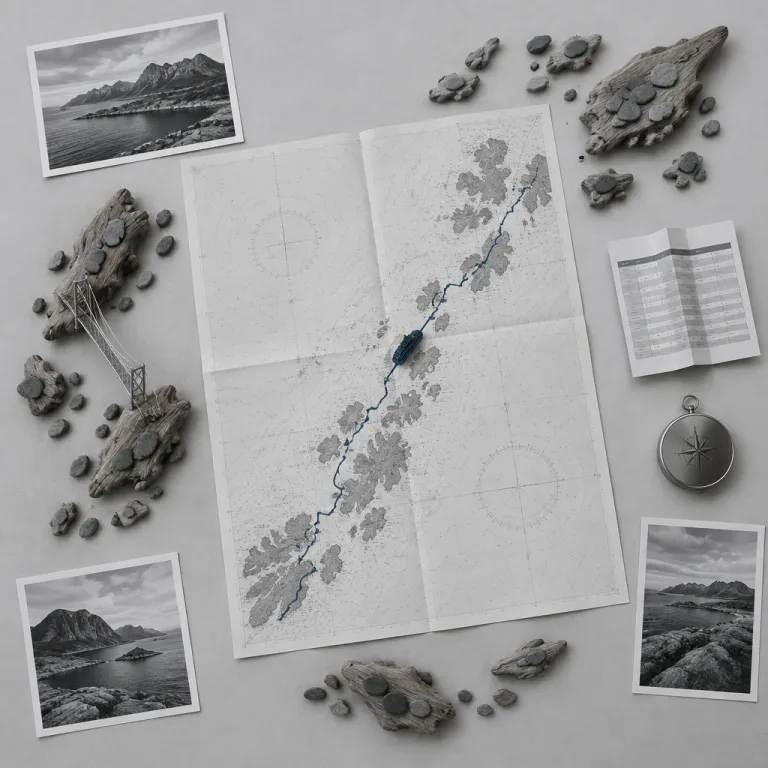
The spine of the archipelago: how Lofoten and Vesteralen connect
Lofoten and Vesteralen look like one sweeping arm of rock on the map. In reality this lofoten island hopping guide begins with a stitched spine of bridges and tunnels that makes the first islands in Norway feel surprisingly accessible. The E10 highway, often called the main Lofoten road, links larger islands in Norway such as Austvågøya, Vestvågøya and Flakstadøya, while side roads peel off toward quieter fishing villages and smaller islands.
Driving this route turns a simple road trip into a sequence of sea crossings. Each bridge frames a new set of peaks and each tunnel exit feels like a curtain lifting on another part of the lofoten islands, which is why many families say the drive itself becomes one of the best parts of the trip. With a rental car you can keep day segments short for children, pausing at a sheltered beach or harbour every hour, and this flexible rhythm will matter more than the total distance you cover.
The northern section around Vesteralen connects differently again. Here the islands of Norway are broader, the valleys wider, and the lofoten road system shares space with the coastal Hurtigruten ship and local ferry routes that knit Andøya, Langøya and Hadseløya together. This lofoten island hopping guide treats that mix of bridge and ferry as an asset, because a short sailing between islands often feels like a reset in the day. Families planning a trip will find that alternating driving days with simple ferry hops keeps everyone engaged without stretching attention spans.
Ferries, coastal boats and the art of almost missing them
The ferries are where this lofoten island hopping guide becomes truly three dimensional. Bridges handle the obvious links, but the most atmospheric islands in Norway often sit one sailing beyond the main road, reached by compact car ferries that feel built for everyday life rather than sightseeing. On these crossings the peaks of Lofoten rise straight from the sea, and the best moments of the trip often happen on deck while children count seabirds and watch the wake.
Key legs include the ferry between Skutvik and Svolvaer, the link from Melbu into Vesteralen, and the classic Moskenes to Bodø route that many travellers use to start or end a longer road trip. Each route runs on its own timetable, so planning a trip means checking seasonal schedules and allowing generous time at the quay, especially in summer when demand is high and rental car queues can build. Families who treat the waiting time as part of the day, with a simple picnic or a short beach walk near the pier, will feel less pressure and more of that slow island rhythm.
For travellers used to sailing itineraries in warmer seas, it can help to think of these ferries as the Arctic counterpart to a refined multi island route in the Saronic Gulf, such as the one outlined in this seven day sailing itinerary from Athens. Here in Norway the vessels are sturdier, the air sharper, yet the same principle applies ; the boat between islands is where you reset the lofoten itinerary and decide whether to linger longer. A small group of families travelling together will often find that one extra unscheduled day on a quieter island becomes the highlight of the entire trip lofoten.
Fishing villages as bases: why two nights beat two hours
Red rorbuer cabins on stilts above the water are the signature stay in Lofoten. Choosing one of these in a working fishing village such as Reine, Henningsvær or Nusfjord turns a simple overnight into an immersion in harbour life, and this lofoten island hopping guide strongly favours two or three nights in each base over fast day hopping. Children wake to the sound of gulls and the gentle knock of boats, while parents can watch the light shift across the bay without needing to start the car.
Reine sits near the southern end of the lofoten islands and works well as a final base on a north to south road trip. Svolvaer, by contrast, makes a practical first stop when you visit Lofoten from the mainland, with easy access to short hikes, sheltered bays and organised tours that suit a small group or a single family. In both towns you will find local operators offering fishing tours, gentle sea kayaking and evening cruises that, in summer, chase the midnight sun and, in the darker months, tilt toward northern lights hunting.
Staying in these fishing villages rather than passing through for a single day gives you time to walk the back lanes, watch the racks of drying cod and talk to crews preparing for the next trip. It also means you can adapt to the seasons ; in summer winter shoulder periods, when crowds thin and ferry schedules shift, you will appreciate not having to rush for every departure. For a broader perspective on how emerging ferry networks can reshape island travel, the analysis of a new Caribbean island hopping ferry network in this in depth feature on regional ferries offers useful parallels for visiting Lofoten and Vesteralen thoughtfully.
Family rhythm: gentle drives, shoreline walks and seasonal light
Families reading a lofoten island hopping guide usually ask the same question first. How many days do we need so the trip feels relaxed rather than rushed, especially with children in the car. A good rule is to plan at least two days in each main base, with driving segments of no more than two hours between them and a planned stop at a beach or harbour every 45 to 60 minutes.
Summer brings long days and the midnight sun, which means you can shift the family rhythm later and enjoy soft light on the water while younger travellers sleep in the car on the way back to your stay in Lofoten. Autumn shortens the day but adds the first real chance of northern lights, especially on clear nights away from larger towns such as Svolvaer, and this is when a flexible lofoten itinerary becomes valuable. You might spend the early evening on a short coastal hike, return for an unhurried dinner, then step outside again later to check the sky without needing to drive.
In summer winter shoulder seasons, when conditions change quickly, a rental car gives you the freedom to pivot between activities. One day might focus on a family friendly hike above a fishing village, the next on a calm beach where children can play while adults watch the shifting northern light on the mountains. For deeper context on how to structure a full day of island hopping with walks and reflection built in, the narrative on walking the Wisdom Path on Lantau in this full day island hopping insight offers a useful template that translates well to planning trip segments in Lofoten and Vesteralen.
Seasonal strategy: ferries, light and a realistic Lofoten itinerary
Choosing the right time for a trip to the lofoten islands shapes everything else. In high summer the focus falls on beach days, easy hikes and late evening drives, while in the darker months the same lofoten island hopping guide leans toward northern lights watching, cosy evenings in rorbuer cabins and shorter, more deliberate movements between islands. Either way, planning a trip means checking ferry timetables carefully and building in margins for weather, especially on exposed routes between Lofoten and Vesteralen.
Families who rent a car for a week or more can design a loop that feels both efficient and unhurried. One classic pattern starts in Svolvaer, spends several days exploring northern islands in Norway around Vesteralen, then curves south along the lofoten road toward Reine with two night stays in at least three different fishing villages. Another option is to focus on visiting Lofoten alone, using a rental car to reach smaller harbours and joining small group tours for specific experiences such as fishing, sea eagle safaris or guided hikes that might be too complex to manage independently with children.
Whatever shape your trip lofoten finally takes, the aim is to let each island earn your time. That might mean an unplanned extra day in a quiet bay because the beach suddenly feels like the best playground in Norway, or a last minute decision to stay in Lofoten longer when a clear forecast hints at northern lights. For ongoing route planning and practical details, a concise travel guide from a trusted source such as Visit Norway, the official Hurtigruten schedules and the Norwegian Public Roads Administration will help you refine the structure of your lofoten best road trip without sacrificing spontaneity.
FAQ
How many days do we need for a family friendly Lofoten and Vesteralen trip ?
For a balanced family itinerary, plan at least seven to ten days across Lofoten and Vesteralen. This allows two or three nights in each main base, with gentle driving days and time for beach stops, short hikes and occasional organised tours. With fewer days you can still enjoy highlights, but you will need to limit the number of islands you include.
Is it better to rent a car or rely on public transport between the islands ?
A rental car offers the most flexibility for families, especially when travelling with children and luggage. Buses do connect the main towns and some fishing villages, but frequencies can be limited, particularly outside peak summer. With a car you can adapt to weather, stop at viewpoints and reach smaller harbours that rarely appear on standard bus routes.
When is the best time to see the midnight sun and northern lights in Lofoten ?
The midnight sun is visible in Lofoten during the high summer period, when the sun does not fully set and evenings stay bright for outdoor activities. Northern lights are most likely from late autumn through early spring, when nights are dark enough and skies can be clear. Families often choose shoulder seasons to balance daylight for exploring with a realistic chance of aurora sightings.
Are the ferries between Lofoten and Vesteralen suitable for children ?
Local car ferries in this part of Norway are generally very family friendly, with indoor seating, restrooms and short crossing times on most routes. Children usually enjoy standing on deck for part of the sailing, but warm layers and windproof clothing are essential even in summer. Booking or arriving early in busy periods helps avoid long waits with younger travellers.
Can we visit both Lofoten and Vesteralen in one road trip without rushing ?
It is entirely feasible to include both archipelagos in a single road trip, provided you keep the number of bases modest and allow at least a week. A common pattern is to start in Svolvaer, spend several days in Vesteralen, then continue south through Lofoten with two night stays in two or three fishing villages. This structure keeps daily driving manageable while still offering a sense of progression along the chain of islands.