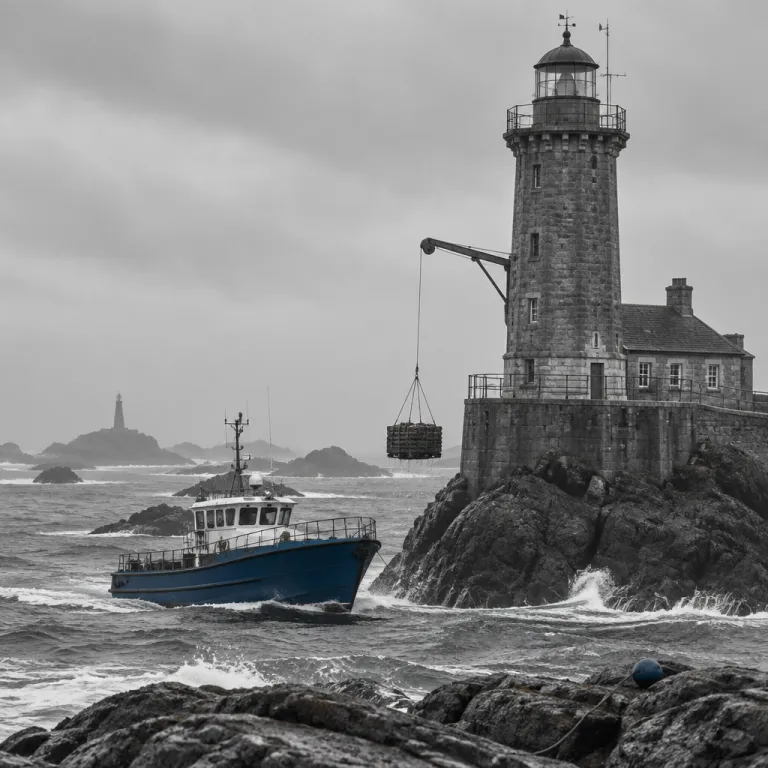
Brittany island lighthouses around Ouessant: a maritime constellation
Off the far western tip of Brittany France, the Iroise Sea holds one of the highest densities of lighthouses anywhere in the country. This is where the main theme of brittany island lighthouses ouessant becomes tangible, because every headland and reef seems to carry a tower or a light that once meant survival for sailors. The result is a granite coast and archipelago where navigation marks are not background scenery but the framework of daily life.
Stand on the ferry deck leaving Brest and you feel the shift as the city falls away and the open sea closes around you. The route threads past the Petit Minou headland, where the Minou lighthouse stands on its stone causeway, and you start to understand why this coast needed such a dense network of beacons with serious light range. Each lighthouse located along this stretch, from Cap Fréhel in the east to the jument lighthouse off Ouessant island, forms part of a chain that has guided ships into and out of the Atlantic for generations.
For a solo traveller interested in island hopping, this is not about ticking off brittany islands but about following the rhythm of the sea and the lights. The crossing towards Ushant, the English name for Ouessant, takes you across the Iroise Sea where currents collide and the swell can feel muscular even on calm days. On clear evenings you may glimpse the flash patterns of a lighthouse powerful enough to cut through fog and storm, each signal a coded promise of land, shelter and a breton community shaped by maritime heritage.
Photographers know this region through the work of Emmanuel Berthier, whose images of the granite coast and the pink granite formations near Ploumanac'h have become visual shorthand for wild Brittany. When you walk these islands yourself, the colours feel even more intense, with pink and grey rock meeting deep green fields and a steel blue sea. The name Emmanuel Berthier appears often in local galleries, a reminder that the dialogue between lighthouses, landscape and light has inspired more than navigational charts.
Although the pink granite coast lies further east, its sculpted rocks echo in the weathered stone of Ouessant and its neighbours. Many travellers first see the phrase brittany island lighthouses ouessant in guidebooks or online searches, then arrive to find a lived in world where the phare, or lighthouse, still anchors identity. Here the word phare is not romantic shorthand but a working term, whether you are talking about the distant silhouette of phare Nividic or the more accessible towers near the mainland such as the Saint Mathieu lighthouse.
Ouessant on foot: paths, sheep and black and white towers
Ouessant island rewards slowness, and the best way to understand its lighthouses is to walk the coastal path that loops around the cliffs. The trail is roughly 35 kilometres, but you can break it into shorter sections that follow the sea edge past low stone walls, tiny fields and the island's famous small sheep. Every few kilometres a lighthouse appears on the horizon, reminding you that brittany island lighthouses ouessant is not an abstract phrase but the geography under your boots.
The western side of the island faces the open sea with almost no shelter, and the wind can feel relentless even in mild weather. From these cliffs you see the offshore silhouettes of the jument lighthouse and phare Nividic, both standing on reefs that vanish under heavy swell, and you sense why a lighthouse powerful enough to punch through Atlantic storms was essential here. On calmer days the light range of these towers is easier to appreciate, as their beams sweep across the Iroise Sea long before dusk fully settles.
Inland, Ouessant's villages show a softer side of Brittany, with whitewashed houses, blue shutters and chapels dedicated to various saints. The name Saint Mathieu appears often in breton religious history, and it links the island symbolically to the Saint Mathieu lighthouse on the mainland, which rises beside the ruins of an abbey. Walking between hamlets, you meet the island's small, hardy sheep grazing near stone crosses, a reminder that this is not a theme park but a working community at the edge of France.
Solo travellers who have already followed spiritual island routes, such as those described in this account of an island hopping journey to Patmos, often find a similar contemplative rhythm on Ouessant. The difference here lies in the constant presence of maritime infrastructure, from radar masts to the sturdy shapes of each lighthouse located on or near the island. You walk with the sound of the sea always present, sometimes as a distant hush, sometimes as a roar against the granite coast.
Local signage uses both French and breton names, so you will see Ouessant alongside Enez Eusa, and references to the wider brittany islands scattered across the Iroise Sea. The word île appears everywhere, from ferry timetables to trail markers, reminding you that each island or île has its own tempo and relationship with the sea. For a solo explorer, this layered identity adds depth to every walk, because you are not only following a path but also tracing the lines between language, landscape and the enduring presence of lighthouses.
From Saint Mathieu to Kéréon: a corridor of lights and stories
The approach to Ouessant begins long before you step on the island, because the corridor of lighthouses between Brest and the Iroise Sea sets the tone. Near the mainland, the Saint Mathieu lighthouse stands beside the ruins of an abbey on a headland that feels like a natural altar above the sea. This mathieu lighthouse, as some travellers call it, marks the transition from the more sheltered coast to the rougher waters that lead towards the brittany island lighthouses ouessant route.
Further along the coast, the Minou lighthouse near Brest guards the narrows with its elegant stone bridge, while the Petit Minou fort watches from the cliff. Together, Petit Minou and the minou lighthouse form a gateway between the roadstead of Brest and the open sea, a passage every ferry and cargo ship must respect. Their combined light range once worked in concert with other beacons to create a safe corridor, and even now their presence reassures anyone heading towards the more exposed brittany islands.
Out near Ouessant, the phare Kéréon stands in the middle of a tidal race, its base hammered by currents that swirl between the island and the mainland. This lighthouse located on a submerged reef is often described as a masterpiece of engineering, with interior woodwork that contrasts sharply with the harshness of its setting. When you pass near it by boat, the sense of isolation is striking, and you understand why keepers here and at the jument lighthouse developed a particular resilience and attachment to their towers.
To the north, the slender silhouette of Île Vierge carries another iconic lighthouse, often cited as one of the tallest traditional stone lighthouses in the world. While Île Vierge and the pink granite coast around Ploumanac'h sit outside the immediate Ouessant island hopping circuit, they belong to the same cultural seascape of brittany france. Travellers planning a wider route sometimes combine these northern lights with a more southern itinerary, such as the one outlined in this refined ten day island hopping journey in Greece, creating a contrast between Mediterranean caldera views and Atlantic granite coastlines.
What unites all these sites is the way maritime heritage predates tourism and still shapes local identity. Stories of shipwrecks, rescues and long winter watches circulate in harbours and cafés from Brest to the smaller ports that serve the brittany islands. For a solo traveller, listening to these accounts while watching the sea through salt streaked windows can be as compelling as any formal museum, because the line between past and present remains blurred along this coast.
Weather, ferries and the art of almost missing the boat
Island hopping around Ouessant and the neighbouring brittany islands begins with the ferry timetable, but the real schedule belongs to the weather. Crossings from Brest or Le Conquet to Ouessant island can feel straightforward on calm days, yet the same route across the Iroise Sea becomes a different journey when Atlantic lows roll in. Travellers quickly learn that the sea, not the clock, decides whether you linger over another coffee or sprint down the quay.
On deck, the view back towards the granite coast shows how the mainland lighthouses form a chain of reference points as you move towards the open sea. The Saint Mathieu lighthouse, the minou lighthouse and other beacons recede one by one, until only the offshore towers like phare Nividic and the jument lighthouse remain visible ahead. This is where the phrase brittany island lighthouses ouessant stops being a search term and becomes the lived experience of watching each phare appear through salt spray while you already want to stay longer than planned.
Autumn suits this route particularly well, because the skies turn dramatic and the paths on Ouessant grow quieter. The sea becomes more expressive, with shifting light that flatters the pink granite formations further east and the darker rocks around Ouessant itself, and the lighthouses seem even more necessary under fast moving clouds. For solo travellers comfortable with flexible plans, this season offers the best balance between atmosphere, space and the practicalities of ferry travel.
Moving car free between these islands is not only possible but often preferable, because it keeps you aligned with the scale of the landscape. On Ouessant, walking and cycling let you feel the wind shifts and hear the sea change tone as you round each headland, while local buses and occasional taxis cover longer stretches when needed. Planning your route with enough slack to miss a ferry by choice, or to accept a weather delay without stress, turns brittany island lighthouses ouessant into a slow travel experience rather than a checklist.
Travellers who have navigated other archipelagos, such as the catamaran routes along Croatia's northern coast described in this analysis of the Kvarner ferry network, will recognise the importance of route level specificity here. In Brittany, the combination of strong currents, variable weather and a dense constellation of lighthouses demands the same respect for local schedules and seamanship. Treat the ferry deck as part of the journey, not a transfer, and you will start to read the coast and its lights with the same attention as the crews who work these waters.
Practical island hopping: where to stay, what to expect, how to read the lights
Staying overnight on Ouessant rather than day tripping changes everything, because dusk and dawn are when the lighthouses assert their full presence. As darkness falls, the beams of phare Nividic, the jument lighthouse and other towers begin their rotations, and you can watch their light range sweep across the sea from clifftop paths or harbour quays. This is when the phrase brittany island lighthouses ouessant feels most literal, as if the entire horizon has been punctuated with coded signals.
Accommodation on the island ranges from simple guesthouses to small inns, many run by families with deep roots in the breton maritime world. Hosts often share stories of relatives who worked at a lighthouse located offshore, crewed pilot boats or fished the dangerous channels between Ouessant and the mainland, and these conversations add texture to your understanding of brittany france. Booking at least one or two nights allows you to match your own rhythm to the island's slower tempo, rather than racing the last ferry back to Brest.
Walking the coastal path with a nautical chart or a good map helps you connect each visible lighthouse to its role in the wider system. You might trace a line from the Saint Mathieu lighthouse to the minou lighthouse, then out towards phare Kéréon and the offshore towers that guard the approaches to the Iroise Sea, noticing how their sectors overlap to create safe corridors. Understanding which lighthouse is most powerful, and how its light range interacts with others, turns a scenic walk into a lesson in applied navigation.
Beyond Ouessant, other brittany islands such as Molène and Sein offer their own combinations of small harbours, chapels dedicated to various saints and modest lighthouses that still matter to local fishers. Each island or île has its own ferry rhythm, and planning an itinerary that respects these patterns is part of the pleasure for a solo explorer. The more time you spend along this coast, the more you realise that the true subject of brittany island lighthouses ouessant is not architecture but the ongoing relationship between people, sea and light.
For deeper background on maritime safety and lighthouse history in France, institutions such as the Musée National de la Marine in Brest, the Service des Phares et Balises and regional archives in Brittany provide reliable context. These sources help explain why this stretch of the granite coast, with its pink granite outcrops and fierce currents, became one of the most carefully lit seaways in Europe. They also underline that while automation has changed daily life for keepers, the cultural and emotional weight of these towers remains strong in local memory.
FAQ
Is Ouessant suitable for a solo traveller without a car ?
Yes, Ouessant is well suited to solo travellers who arrive on foot, because the island has a network of walking paths and small roads that can be explored easily without a vehicle. Bicycle rentals and limited local transport help cover longer distances, while most coastal viewpoints and lighthouse vantage points are accessible on foot. Travelling car free also aligns better with the island's scale and the slower rhythm of brittany island lighthouses ouessant.
How many days should I spend on Ouessant to see the main lighthouses ?
Two full days on Ouessant usually allow enough time to walk key sections of the coastal path and view major lighthouses such as phare Nividic and the jument lighthouse from land. A third day gives you more flexibility for weather changes and the option of a boat tour that passes closer to offshore towers. Staying overnight rather than day tripping ensures you experience the lighthouses at dusk and dawn, when their light range is most impressive.
When is the best season to visit Ouessant and the surrounding islands ?
Late summer and autumn often provide the best balance of manageable weather, fewer crowds and dramatic light along the granite coast. During this period the sea tends to be more expressive, with shifting skies that highlight both the pink granite formations further east and the darker rocks around Ouessant. Ferry services usually run regularly, but it remains wise to allow flexibility in case strong winds affect crossings in the Iroise Sea.
Can I visit other Brittany islands with significant lighthouses on the same trip ?
Yes, it is feasible to combine Ouessant with nearby islands such as Molène, and with mainland lighthouse sites like the Saint Mathieu lighthouse and the minou lighthouse near Brest. Travellers with more time sometimes extend their route to include Île Vierge and sections of the pink granite coast, creating a broader brittany island lighthouses ouessant themed journey. Planning around ferry timetables and local bus connections is essential, especially if you prefer to remain car free.
Are there guided tours focused on lighthouse history around Ouessant ?
On Ouessant and in Brest, various local operators and cultural associations offer guided walks, boat trips and talks that focus on lighthouse history and maritime heritage. These experiences often cover the technical aspects of how a lighthouse powerful enough to operate in the Iroise Sea was built and maintained, as well as stories of keepers and shipwrecks. Checking with the Ouessant tourist office and maritime museums in Brittany France is a reliable way to find current options.