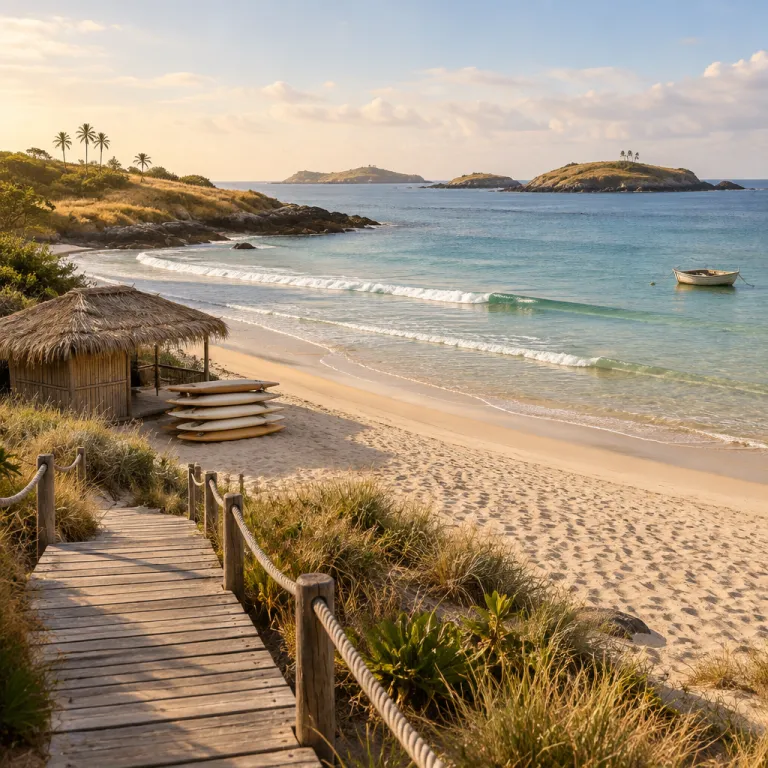
Why island hopping is ideal for the best surf spots for beginners
Island chains offer a natural progression between gentle surf and slightly more powerful waves. For a true beginner, moving from one protected beach to another lets you test different surf spots without committing your entire surf trip to a single surf town. This flexible rhythm turns learning to surf into a relaxed island hopping journey rather than a stressful search for the single best surf break.
On many islands, the most beginner friendly areas sit in small coves where reefs and headlands filter incoming swell into soft, rolling wave lines. These sheltered beach breaks create consistent beginner waves at mid to high tide, while nearby point breaks and reef breaks remain options for later, once your surfing confidence grows. By planning your route between several surf towns in the same archipelago, such as Costa Rica’s Tamarindo (Playa Tamarindo and Playa Langosta) and Nosara (Playa Guiones) or Spain’s Corralejo on Fuerteventura (Waikiki Beach and Rocky Point), you can match each day’s conditions to your current beginner surf level and energy.
Island hopping also solves a practical problem that many beginners underestimate; the best surf for learners does not always align with the best time for general tourism. A calm lagoon that looks perfect for swimming can be too flat for surfing, while a dramatic swell that excites experts can overwhelm beginners at the beach break. Moving between islands and spots gives you more chances to find that sweet spot where the waves are small, the area is uncrowded, and the whole experience feels fun rather than intimidating.
Choosing beginner friendly islands and surf towns
When you plan an island hopping surf trip, start by identifying surf towns known for friendly surf culture and reliable surf schools. Look for a town where the main beach break sits close to the centre, with a visible pier or point that naturally shelters one side and creates smaller waves for beginners. A compact surf town layout with a nearby parking lot, cafés, and a relaxed park or promenade makes it easier to focus on your first surf sessions instead of logistics.
In Central America, many islands and coastal areas near Costa Rica’s established surf camps offer day trips to mellow surf spots that suit beginners. You might stay on a quieter island, then take a short boat ride to a sandy bay where beach breaks peel gently along the shore at mid to high tide. Around Tamarindo and Nosara, for example, the most approachable months for new surfers usually fall between November and April, when consistent but moderate Pacific swells in the 2–5 ft range combine with light morning winds and easy access from Liberia airport, which sits about 1.5–2 hours away by road.
For island hopping that blends refined camping with surfing, look at coastal routes similar in spirit to refined camping along wild coasts and quiet playas, as described in this guide to refined camping in Baja Norte. While that article focuses on a mainland coastline rather than islands, the principles transfer directly to surf trips between small islands with simple camp style stays. You want easy access to the beach, safe parking lots near the surf spots, and enough infrastructure for surf schools to operate consistently during the best time of year for beginner surf conditions.
Reading waves, tides, and breaks when you island hop
Understanding how waves work is essential if you want to move confidently between different surf spots on multiple islands. A beach break forms where waves break over sand, which usually makes it safer for beginners than sharp reef or rock, especially when you are still learning to fall correctly. Point breaks, by contrast, wrap around a headland or point and can create long, peeling waves that are beautiful but sometimes too fast for new surfers.
On an island hopping itinerary, you will often see the same swell produce very different surfing conditions from one bay to the next. A sheltered cove might offer the best surf for beginners with soft, spilling waves, while a more exposed point a few kilometres away turns the same swell into powerful, hollow breaks. Check local tide charts carefully, because many beginner waves become significantly easier at mid to high tide when the extra water depth softens the wave face and reduces the risk of hitting the bottom during a wipeout.
As you compare an island hopping route with a classic single beach vacation, it helps to read a detailed breakdown such as this guide to choosing between island hopping and a classic beach vacation. That kind of analysis clarifies whether you prefer to stay at one beach break and repeat the same wave every day, or whether you enjoy the variety of new surf spots and changing breaks. For many beginners, the ability to move on from a crowded area or a challenging point break to a more forgiving surf town is exactly what keeps the learning process enjoyable.
Learning to surf on the move: schools, camps, and safety
For the best surf spots for beginners, professional guidance matters more than chasing the most famous wave names. Reputable surf schools on island chains usually know which beach offers the safest beginner waves at any given time, and they will adjust lesson locations as swell and wind change. When you book lessons, ask whether the instructors move between several surf spots or stay fixed at one pier or point, because mobility often means better conditions for your level.
Surf camps that operate across multiple islands or within a wider coastal area, such as those found near Costa Rica’s more accessible archipelagos, can structure a week so that each day introduces slightly different breaks. One day might focus on a mellow beach break with white water practice, while the next shifts to a sheltered point break where you learn to angle along the wave face. As one instructor in Fuerteventura’s Corralejo likes to tell nervous students, “We start where the waves forgive your mistakes, then move you step by step toward the spots that reward your progress.”
Safety should guide every decision, from choosing the best time of day to enter the water to deciding whether a particular surf town suits your current skills. Aim for sessions when the tide and swell combine to create slow, rolling waves, and avoid low tide at shallow beach breaks where the sandbanks can feel unforgiving. If a post surf debrief with your instructor highlights fatigue or nerves, treat that as a signal to choose an easier, more beginner friendly area for the next session rather than pushing into heavier waves too soon.
Island character, surf culture, and the rhythm of a beginner surf trip
Every island has its own surf culture, and that character shapes how comfortable beginners feel in the water and on shore. Some surf towns revolve around a central pier, a lively park, and a cluster of cafés where post surf conversations flow as easily as the waves. Others feel quieter, with a single beach, a small parking lot, and a handful of surf schools that know every sandbank and point by heart.
When you plan an island hopping route, think about how each stop will feel at different times of day, not just how the surf breaks. A town that seems sleepy at midday can transform into a great place for evening fun, with relaxed bars and restaurants where you can trade stories about beginner surf wipeouts and small victories. Look for islands where the main beach break sits within walking distance of accommodation, because that proximity encourages short, frequent sessions that suit beginners better than one long, exhausting attempt.
As you refine your itinerary, it can be helpful to read reflective travel writing such as this nuanced case for choosing a so called boring island. That perspective reminds you that the best surf for beginners often appears in places that feel understated rather than dramatic at first glance. A quiet area with gentle waves, easy access, and a friendly surf community will usually serve your learning far better than a famous, crowded point break that looks impressive but feels overwhelming.
Practical planning tips for island hopping to beginner surf spots
Good logistics turn a theoretical list of the best surf spots for beginners into a smooth island hopping reality. Start by mapping ferry routes, small airports, and local boat services that connect each surf town and beach area you want to visit. Then layer in information about the best time of year for consistent beginner waves, paying attention to both swell seasons and prevailing winds.
On each island, identify at least two alternative surf spots so you can adapt if one beach break becomes too crowded or the wind turns onshore. Aim to stay near a central point such as a pier, a harbour, or a main park, because these hubs usually sit close to the most accessible surf schools and rental shops. When possible, choose accommodation within walking distance of the beach, which reduces reliance on a parking lot and lets you time your sessions around high tide or low tide windows without worrying about transport.
Pack with the realities of beginner surf travel in mind; that means prioritising sun protection, a well fitting wetsuit or rash vest, and a soft top board if you are not renting from surf camps or surf schools. A small waterproof bag for valuables makes it easier to move between different breaks on the same day, especially if you are exploring several surf spots on foot. Finally, keep a simple post surf routine, such as stretching in a nearby park or quiet corner of the beach, to help your body recover so that each new island and wave still feels fun rather than exhausting.
Key statistics about beginner surfing and coastal travel
- The International Surfing Association has estimated that tens of millions of people now surf worldwide, and a significant share of new participants each year are adult beginners seeking gentle beach breaks rather than powerful reef waves.
- Reports from the World Tourism Organization and the World Travel & Tourism Council highlight that coastal and marine tourism represents a major share of global tourism revenue, which helps explain why many islands now support surf schools and surf camps aimed specifically at beginners.
- Surf education programs in countries such as Australia indicate that structured beginner lessons can substantially reduce injury risk compared with unsupervised attempts, underlining the value of professional instruction at beginner friendly surf spots.
- Travel industry surveys consistently show that multi destination trips, including island hopping itineraries, have grown faster than single resort stays in recent years, reflecting a shift toward more flexible, experience based surf trips.
FAQ: Island hopping and the best surf spots for beginners
What makes a surf spot suitable for beginners during an island hopping trip?
A suitable beginner surf spot combines soft, spilling waves, a sandy beach break, and minimal hazards such as rocks or strong rip currents. On islands, coves sheltered by headlands or points often create these gentle conditions, especially at mid to high tide. Easy access from the town, clear signage, and the presence of surf schools are further signs that the area is beginner friendly.
How many islands should I include in a one week beginner surf trip?
For most beginners, two or three islands in one week provide enough variety without turning the journey into constant transit. This pace allows at least two full surf days per island, which is important for adapting to local breaks and wave patterns. More frequent moves can cut into water time and make it harder to progress from white water to unbroken waves.
Is it better to learn to surf at a beach break or a point break?
Most instructors recommend starting at a forgiving beach break, where waves break over sand and the take off zone is wide. Point breaks can offer longer rides but often have more concentrated take off spots and stronger currents, which can overwhelm beginners. Once you are comfortable paddling, standing, and trimming along the wave face, a mellow point break can become a rewarding next step.
How do I choose between an island hopping surf trip and a single beach vacation?
If you value variety, empty lineups, and the chance to adjust conditions to your learning curve, island hopping usually wins. Staying at one beach suits travellers who prefer routine, minimal logistics, and getting to know a single surf community deeply. Your decision should balance your appetite for movement with your desire for consistent, predictable waves.
What is the best time of day for beginners to surf on islands?
On many islands, early morning offers the cleanest waves and the calmest winds, which helps beginners read the ocean more easily. Aim for sessions when the tide is mid to high, because extra water depth softens the wave and reduces the risk of hitting the bottom. Local surf schools and camps can advise on the exact best time for each specific beach and season.