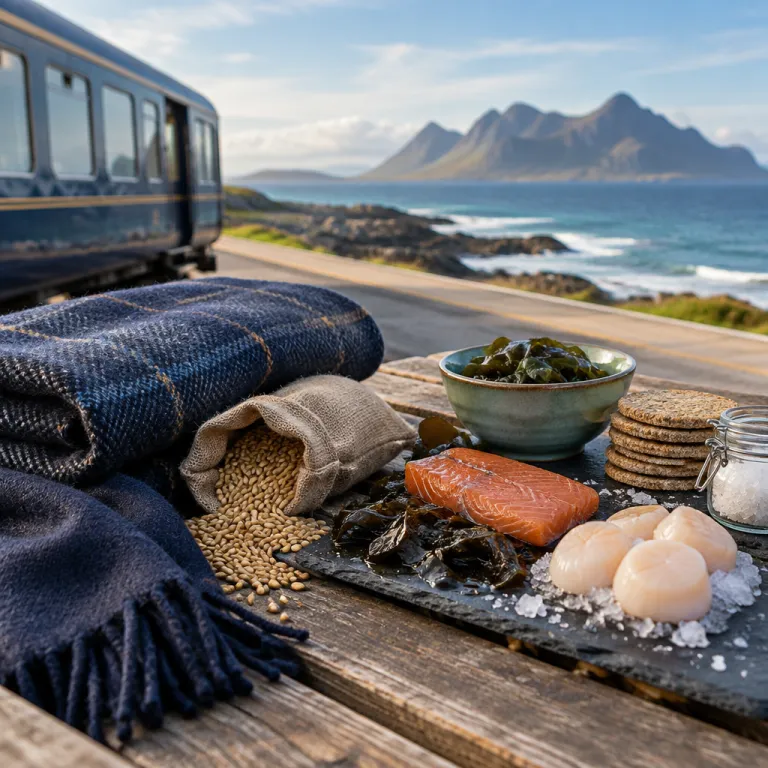
The refined route from Edinburgh to the Isle of Skye by train
Traveling from Edinburgh to the Isle of Skye by train turns a simple transfer into a layered island hopping experience. The rail journey across Scotland links the capital of Edinburgh with the rugged Isle of Skye landscapes, giving you time to absorb each loch and glen along the way. This route suits travelers who value the journey as much as the island destination.
The classic itinerary runs from Edinburgh to Inverness by train, then onward to Kyle of Lochalsh on the west coast. From Kyle you cross the bridge to the island, or connect with a local ferry if you prefer a short sea crossing to frame your first visit to Skye. This multi stage journey lets you experience both the Scottish Highlands interior and the Atlantic edge in a single day.
For many, the best balance is to break the Edinburgh–Skye rail journey into two days and stay overnight in Inverness. This pause gives you time to walk along the River Ness, visit the nearby shores of Loch Ness, and adjust your pace before continuing toward Kyle of Lochalsh and the Isle of Skye. If you are planning a longer Highlands tour, this stop also works as a base for a small group day tour into Glen Coe or toward Loch Lomond before you continue west.
Rail planners often ask whether the Edinburgh to Isle of Skye train route is faster than driving. In pure time, driving from Edinburgh to Skye can be quicker, but the train offers a calmer journey with space to read, plan your island hopping, and watch the Scottish Highlands unfold. When you factor in fatigue, weather, and the cost of parking at each castle or loch, the train becomes one of the best options for a relaxed and scenic approach.
Designing an island hopping itinerary around the Skye rail route
Using the Edinburgh to Isle of Skye train as your backbone, you can design an island hopping route that feels both coherent and adventurous. Start by mapping the main rail hubs of Edinburgh, Inverness, and Kyle of Lochalsh, then layer in island connections by ferry and local bus. This structure keeps public transport simple while leaving room for detours to lesser known islands and lochs.
From Inverness, many travelers add a day tour along Loch Ness before continuing toward Skye. A small group Highlands tour from the city can include viewpoints over the loch, a visit to Urquhart Castle, and time in quiet villages that most Skye tour buses simply pass. Returning to Inverness in the evening, you still catch an early train the next day toward Kyle and the Isle of Skye bridge.
Once you reach Kyle of Lochalsh, you stand at a crossroads for island hopping in Scotland. One direction leads across the bridge to Portree, Kilt Rock, and the Old Man of Storr on Skye, while another points south toward Eilean Donan Castle and the sea lochs that frame the road to Glen Coe. With careful timing, you can combine a Skye day excursion with a second island, echoing the style of a refined two island hop such as the one between Corsica and Sardinia described in this Mediterranean two island itinerary.
For travelers focused on hidden gems, the key is to use the main Edinburgh–Isle of Skye rail line as a spine, then branch off to quieter corners. Consider a ferry from Skye to the Small Isles, or a side trip from Inverness to the Black Isle for coastal walks and dolphin watching. Each added island or loch should feel intentional, not rushed, so allow enough time between trains and ferries to keep the journey elegant rather than hectic.
Hidden highland and island stops between Edinburgh and Skye
Many guides rush from Edinburgh to the Isle of Skye by train without pausing at the subtle places in between. Yet the most memorable island hopping often comes from these quieter stops, where a single loch or glen reshapes your sense of Scotland. Think of the journey as a chain of islands on land, each linked by rail rather than by ferry.
On the way north from Edinburgh, consider breaking your trip near Loch Lomond for a night. From there, you can join a small group Highlands tour that explores Glen Coe, visits lesser known viewpoints, and still returns you to the rail line in time for your next train. This approach mirrors the slow travel ethos behind a quiet Thai island escape such as the one described in this guide to a peaceful island hopping base.
Farther north, the stretch between Inverness and Kyle of Lochalsh is one of the best rail journeys in the Scottish Highlands. The train skirts sea lochs, passes near Eilean Donan Castle, and offers repeated views toward distant islands that tempt future visits. If you time your journey for late afternoon, the light over each loch and isle can be extraordinary, turning a simple transfer into a highlight of your Highlands tour.
Once on the Isle of Skye, hidden gems cluster away from the main Portree to Trotternish circuit that includes Kilt Rock and the Old Man of Storr. Consider a Skye day focused on the Sleat peninsula, sometimes called the garden of Skye, where quiet bays and small communities offer a softer side of the island. Another option is to visit settlements around Waternish or Duirinish, where sea cliffs, crofting townships, and views toward the Outer Hebrides create a layered sense of place.
Steam trains, Jacobite routes, and how they fit your Skye itinerary
Travelers often ask how the famous Jacobite steam train fits with an Edinburgh to Isle of Skye train based itinerary. The Jacobite steam service runs between Fort William and Mallaig, and it is separate from the Inverness to Kyle of Lochalsh line that serves Skye. With careful planning, you can integrate both rail experiences into a single extended Highlands tour.
One option is to travel from Edinburgh to Fort William by public transport, ride the steam train to Mallaig, then take a ferry to Skye and continue by bus to Portree. This route feels more complex than the direct Edinburgh–Isle of Skye rail and bus combination, but it rewards you with the cinematic viaduct views that made the Jacobite steam journey famous. From Portree, you can still visit island highlights such as Kilt Rock, the Old Man of Storr, and the Quiraing on a Skye tour or by local bus.
Another approach keeps the Edinburgh to Isle of Skye train as your main axis, then adds the Jacobite as a separate day tour. You might base yourself in Fort William for a night, ride the steam train to Mallaig and back, then continue by bus or hire car toward Glen Coe and on to the Kyle region. This structure suits travelers who want both the best known steam train experience and the quieter, more local feel of the Inverness to Kyle of Lochalsh line.
When weighing options, remember that the Jacobite steam service is seasonal and often sells out, while the regular train to Kyle runs year round with more flexible tickets. If your priority is island hopping and time on Skye itself, keep the Edinburgh to Isle of Skye train route simple and treat the Jacobite as an optional extra. If your passion is historic rail, you may instead design the whole journey around steam, then add a shorter Skye day visit from Mallaig by ferry.
Practical planning: tickets, public transport, and timing your Skye days
Planning an Edinburgh to Isle of Skye train journey requires attention to timetables, but the logistics remain manageable. Start by checking rail times from Edinburgh to Inverness and from Inverness to Kyle of Lochalsh, then align these with local bus or ferry schedules to Portree and other island hubs. Building a simple spreadsheet or written timetable helps you visualize each day and avoid rushed transfers.
Public transport on the Isle of Skye itself is limited but workable if you focus on a few key areas. Buses link Portree with Kilt Rock, the Old Man of Storr, and other Trotternish peninsula sights, though services may be infrequent outside peak seasons. For a more flexible Skye tour, consider joining a small group minibus that departs from Portree and covers multiple highlights in one Skye day while you leave the driving to a local expert.
When allocating time, many travelers underestimate how long it takes to move between lochs, glens, and island viewpoints. A single day tour from Inverness to Skye and back can feel rushed, leaving little space to visit villages or walk along the coast. For a more balanced experience, plan at least two nights on the island, which gives you one full day for the classic circuit and another for quieter corners or a boat trip to nearby isles.
Tickets for the Edinburgh–Isle of Skye rail segments are usually cheaper when booked in advance, especially on popular days. Flexible passes can be worthwhile if you intend to hop between multiple Scottish Highlands routes, including side trips toward Loch Lomond, Glen Coe, or even a separate Jacobite steam excursion. Always leave buffer time between your last train and any evening ferry, as weather and minor delays are part of the reality of island and Highland travel.
Reading landscapes: from city rails to island horizons
One of the quiet pleasures of traveling from Edinburgh to the Isle of Skye by train lies in watching the landscapes shift. You leave the stone terraces of Edinburgh, cross farmland, then enter the rising contours of the Scottish Highlands where each loch and glen hints at the coast beyond. By the time you reach Inverness or Kyle of Lochalsh, the air, light, and sense of space feel distinctly island focused.
To deepen this experience, treat the journey as a lesson in reading maps and terrain, much like planning complex island hopping in archipelagos. A detailed rail and road map of Scotland helps you trace how the line follows river valleys, skirts lochs, and approaches the sea, echoing the way ferries weave between islands. For travelers interested in honing this skill, the principles outlined in this guide to reading island maps for memorable routes translate surprisingly well to the Scottish context.
On Skye itself, the landscape invites a similar kind of attentive reading. The cliffs of Kilt Rock, the spire of the Old Man of Storr, and the ridges of the Cuillin range all tell stories about volcanic origins, erosion, and human settlement patterns on the island. As you visit viewpoints and walk along loch shores, you begin to see how each bay, headland, and glen once shaped travel routes long before any train or Highlands tour existed.
For island hopping enthusiasts, this way of seeing turns the Edinburgh–Isle of Skye journey into more than a transfer between city and island. It becomes a framework for future trips, whether you are planning a Skye tour, a circuit of other Scottish isles, or a return to different archipelagos around the world. The skills you gain in timing tides, reading weather, and aligning public transport with natural rhythms will serve you across many journeys.
Extending beyond Skye: building a wider Scottish island hopping circuit
Once you have mastered the Edinburgh to Isle of Skye train route, it becomes a natural springboard for a wider Scottish island hopping circuit. From Skye, ferries connect to the Small Isles, the Outer Hebrides, and mainland ports that link back toward Loch Lomond and the central belt. Each added island introduces new combinations of loch, moor, and machair, expanding your sense of what Scotland’s coasts can offer.
A refined itinerary might start in Edinburgh, travel by train to Inverness, continue to Kyle of Lochalsh, and spend several nights on the Isle of Skye before sailing onward. From Portree or nearby ports, you can visit isles such as Raasay for quiet walking trails, or take longer crossings toward Harris and Lewis for standing stones and Atlantic beaches. Returning via Ullapool or another mainland port, you can loop back through the Scottish Highlands, perhaps adding a final night near Glen Coe before your last train south.
Throughout this circuit, the principles you applied on the initial Edinburgh–Isle of Skye journey remain useful. Allow generous time between each train, ferry, and small group tour, and prioritize a few meaningful visits over a checklist of castles and viewpoints. Whether you are watching the light change over Loch Ness, tracing the shoreline of Loch Lomond, or standing beneath the Old Man of Storr on a quiet Skye day, the aim is to let each place breathe within your schedule.
By the end of such a journey, the phrase “from Edinburgh to the Isle of Skye by train” will mean more than a single route on a timetable. It will represent a gateway into layered island and Highland experiences, where public transport, careful planning, and a willingness to pause at hidden gems combine to create a genuinely elegant style of travel. That combination, more than any single castle or loch, is what keeps travelers returning to Scotland’s islands again and again.
Key figures for rail and island travel between Edinburgh and Skye
- The rail distance from Edinburgh to Inverness is approximately 250 kilometres, typically taking around three and a half hours on direct services according to ScotRail journey planners consulted in 2024, which makes it a comfortable first stage before continuing toward Kyle of Lochalsh.
- The Inverness to Kyle of Lochalsh railway line covers about 130 kilometres and usually takes just over two and a half hours, making it one of the longest continuous scenic stretches in the Scottish Highlands rail network, based on Transport Scotland route summaries available in 2024.
- Ferries between Mallaig and Armadale on Skye generally take around 45 minutes, and Caledonian MacBrayne seasonal timetables for 2023–2024 show that this short crossing carries hundreds of thousands of passengers each year, underlining its importance for island access.
- Tourism statistics from VisitScotland’s 2019–2022 regional reports indicate that the Isle of Skye receives well over half a million visitors annually, which explains the pressure on roads and highlights the value of using trains and public transport where possible.
- Surveys of visitors to the Scottish Highlands published by VisitScotland and rail tourism studies in the early 2020s show that scenic rail journeys, including the Jacobite steam route and the Kyle line, rank among the top five most memorable experiences, often rated ahead of individual castles or museums.
FAQ about traveling from Edinburgh to the Isle of Skye by train
Can you travel all the way from Edinburgh to the Isle of Skye by train only ?
You cannot reach the Isle of Skye entirely by train, because the rail line ends at Kyle of Lochalsh on the mainland. From there, you either cross the road bridge by bus, taxi, or car, or use a nearby ferry connection depending on your chosen route. The train still covers most of the distance and forms the core of a low stress journey.
How long does the train journey from Edinburgh to Skye usually take ?
If you travel from Edinburgh to Inverness and then from Inverness to Kyle of Lochalsh on the same day, the combined rail time is typically around six to seven hours. You then need to add transfer time from Kyle to your accommodation on the Isle of Skye, often another one to two hours by bus or car. Many travelers split the journey with an overnight stop in Inverness to keep the pace comfortable.
Is the Jacobite steam train part of the standard route to Skye ?
The Jacobite steam train operates between Fort William and Mallaig and is not on the direct Edinburgh to Inverness to Kyle of Lochalsh route. You can include it by traveling via Fort William and then taking a ferry from Mallaig to Skye, but this requires extra planning and usually more days. It is best treated as an optional scenic extension rather than the default way to reach the island.
Do you need a car once you reach the Isle of Skye ?
A car offers the most flexibility on the Isle of Skye, especially for reaching remote trailheads and lesser known bays. However, it is possible to explore key sights such as Portree, Kilt Rock, and the Old Man of Storr using a mix of local buses and organized small group tours. Travelers relying on public transport should plan carefully around limited timetables and allow extra time for connections.
When is the best time of year to take the train route to Skye ?
Late spring and early autumn often provide a good balance of daylight, scenery, and slightly quieter trains and roads compared with peak summer. Winter journeys can be atmospheric, with snow on the hills, but services may be affected by weather and some island facilities operate on reduced hours. Whatever the season, booking rail tickets and key accommodations in advance is strongly recommended.